
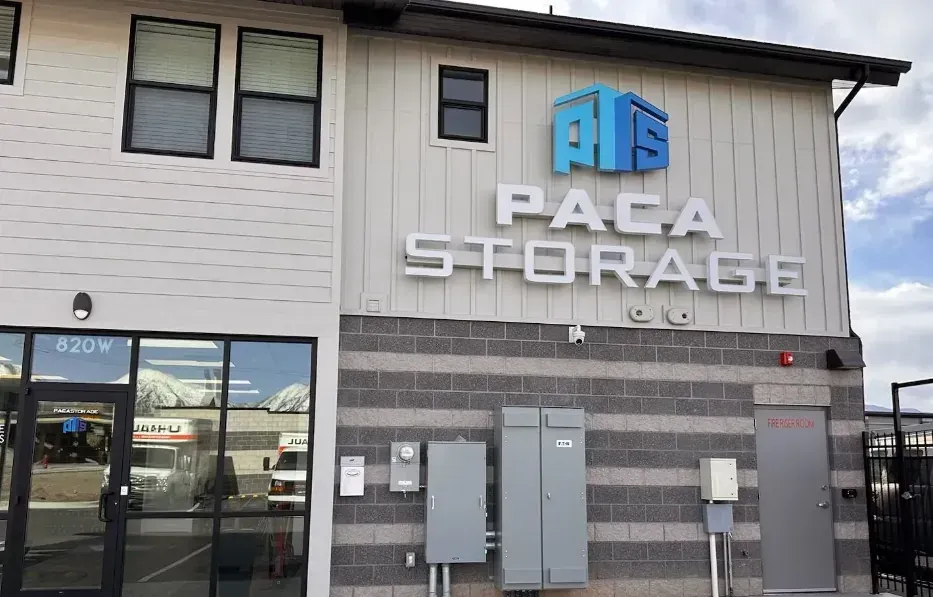
Self Storage in Payson, UT
A plain-English guide to renting self storage in Payson — how it works, what to look for in a facility, and how to prepare your belongings so they come out the way they went in.
Most people rent self storage in Payson, UT exactly once, under time pressure, during a week that is already stressful. They pick a facility off a map, guess at a size, sign something they don't read, and hope for the best. It usually works out. Sometimes it doesn't — and the ways it goes wrong are predictable enough to be worth twenty minutes of reading.
If you've searched "self storage Payson UT" and gotten a dozen facilities that all look identical from the road, the differences between them are real — they're just not the things the listings show you. This page is the guide we wish every first-time renter had: what self storage actually is, how the rental works, what separates a good facility from a cheap one, how to pack a unit so nothing is ruined, and what you legally can't put in one. If you already know all that and just want sizes and prices, go straight to our storage units in Payson, Utah page — the full rate table lives there.
How Self Storage Works
Self storage is simple by design, in Payson and everywhere else. You rent a private, lockable space by the month. You supply the lock, you hold the only key, and staff do not enter your unit except in narrowly defined circumstances spelled out in your rental agreement — typically an emergency, a legally required inspection, or a default on payment. It is not a warehouse where someone handles your belongings for you. Nobody inventories your things, nobody moves them, and nobody signs for them. The trade-off for that privacy is that the responsibility for packing well and insuring properly sits with you.
The rental itself is closer to a parking space than an apartment lease. There's no credit check drama, no first-and-last-month, no year-long commitment at a well-run facility. You sign a short agreement, get a gate code, and the space is yours until you give notice. At our Payson facility every unit is month-to-month, which means the arrangement can be two months or two years and the paperwork is identical.
What you're really buying is three things: space, access, and conditions. Space is obvious. Access is how easily and how often you can get to your belongings. Conditions are whether the unit protects what's inside it. Facilities compete on all three, and the cheapest option in any market is usually cheap because it gave up on one of them.
What to Look for in a Payson Self Storage Facility
There are a handful of self storage options within a short drive of Payson, and from the road they look interchangeable. They are not.
Here is the part worth internalising: what actually separates facilities is rarely visible from the parking lot, and the list below is roughly ordered by how much each item will matter to you over a year of renting.
Is anyone actually there?
An on-site manager is the single most underrated feature in self storage. Facilities run remotely from a call center have nobody to notice a door left open, a light burned out, a gate malfunctioning, or a vehicle that's been circling the lot. When something goes wrong at an unstaffed facility, you find out on your next visit. Ask whether anyone is physically on the property and during what hours.
Climate control availability, not just existence
Plenty of facilities advertise climate-controlled units and have twelve of them, all occupied, with a waitlist. That's functionally the same as not offering it. Ask what share of the facility is climate controlled. At our Payson property, the majority of 325 units are — which is why we can almost always place you in one the same week you call.
Access hours that match your actual life
"Extended hours" can mean 6 a.m. to 10 p.m., which is fine until you're loading a truck at 4 a.m. for a cross-country drive or grabbing camping gear at midnight. True 24/7 keycode access removes the question entirely. Also worth asking: are gate hours and office hours different, and does the gate actually work after hours or does it require someone to buzz you in?
The physical property
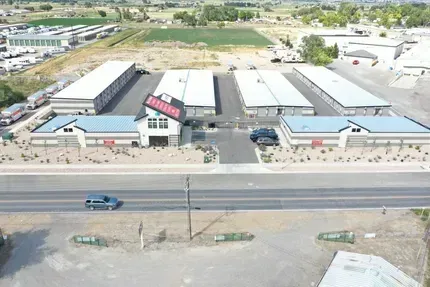
Walk it before you sign, or at least look at satellite imagery. Is the surface paved or gravel? Gravel turns to mud in March and dust in July, and both end up in your unit. Is the perimeter fully fenced or fenced on three sides? Are there working lights across the whole lot, or just near the office? Are the drive aisles wide enough to turn a 26-foot truck?
The real monthly cost
Compare the total, not the headline. Administrative fees, mandatory insurance when you may already be covered, a required proprietary lock, and promotional rates that step up after 60 days all change the math. Ask directly: "What will I pay in month four?" A straightforward rate beats a teaser almost every time.
Exit terms
How much notice do you need to give? Is there a penalty for leaving early? Do you get a partial refund for an unused month? These questions cost nothing to ask up front and are expensive to discover later.
Quick gut check: ask a facility what happens if you need to switch to a bigger unit mid-rental. A good operator will move you and prorate it. A bad one will make it your problem. The answer tells you a lot about everything else.
Indoor, Drive-Up, or Outdoor Parking?
Most self storage decisions come down to picking the right type, not just the right size. The three formats solve different problems, and choosing wrong is the most common reason people end up unhappy with an otherwise fine facility.
Indoor units sit inside a building, accessed through a shared corridor. They're the most protected from weather and the most secure, since an intruder would have to get through the gate and then the building. The trade-off is the carry — you're moving things from the truck, down a hallway, to your door. Best for long-term storage of things you won't visit often.
Drive-up units have a roll-up door you back a vehicle directly to. The convenience is enormous if you're accessing the unit weekly, moving heavy furniture, or running a business out of it. The trade-off is slightly more exposure to outside temperature at the door. Best for active use, contractors, and household moves.
Climate-controlled units can be either format, and the label describes the conditions rather than the layout. If you're storing anything made of wood, fabric, paper, or electronics for more than a season, this is the category you want. Utah's swing from 95°F summers to sub-freezing winters is exactly the cycle that ruins furniture.
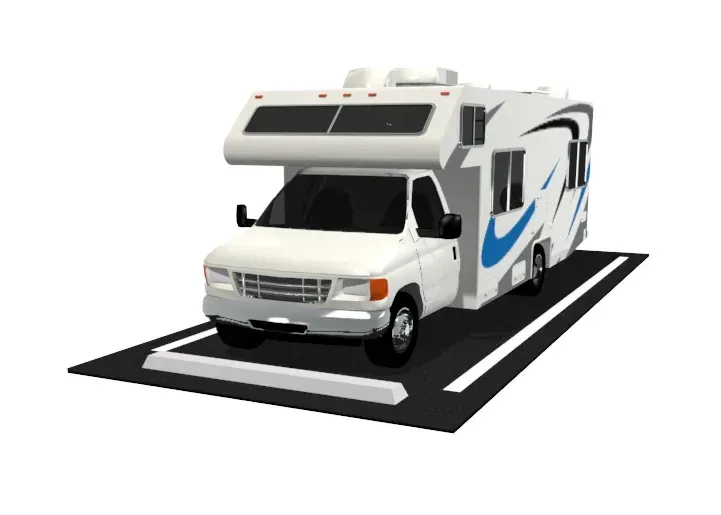
Outdoor parking spaces are for vehicles: RVs, boats, trailers, work trucks. They're paved, striped, fenced, and camera-monitored, and they cost a fraction of an enclosed unit. They are not for household goods — an uncovered space offers no protection from weather.
Deeper detail on each: climate-controlled storage · drive-up units · RV storage · boat storage.
How to Prepare Your Belongings for Storage
Almost every self storage horror story traces back to packing, not to the facility — and Payson's climate is less forgiving than most, swinging from 95°F summer afternoons to sub-freezing winter nights inside the same twelve months. These are the habits that matter most.
Use uniform boxes
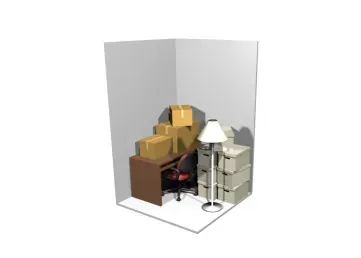
Same-size boxes stack square to the ceiling and don't collapse under each other. Mismatched boxes waste a third of your vertical space and crush the ones on the bottom.
Leave a center aisle
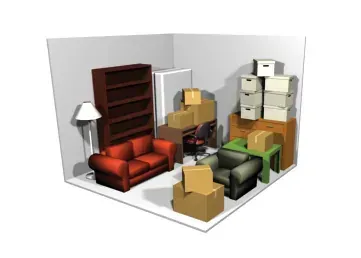
Pack to the walls and leave a walking lane down the middle. Without it, reaching anything at the back means unloading everything in front of it.
Get everything off the floor
Pallets, 2x4s, or even a layer of plastic totes. It costs almost nothing and protects against the one spill or seep that would otherwise reach your cardboard.
Beyond those three, a handful of specifics save the most grief:
- Everything must be bone dry. A damp tent, a rug that was cleaned last week, a cooler with condensation inside — any of these will grow mildew in a sealed space and spread it to whatever it touches.
- Defrost and dry appliances completely, then store them with the doors propped slightly open. A sealed refrigerator becomes a mold terrarium.
- Drain fuel and fluids from mowers, trimmers, and small engines. Gasoline is prohibited in storage units, and stale fuel wrecks a carburetor anyway.
- Disassemble what disassembles. Table legs off, bed frames apart, mirrors out of dressers. Tape the hardware in a labeled bag to the underside of the piece it belongs to.
- Don't wrap furniture in plastic. It traps moisture against the surface. Use moving blankets or breathable cloth covers instead.
- Label two sides of every box and keep a rough list on your phone. You will not remember which box the passports are in.
- Store the things you'll need first at the front. Seasonal items, tools, and anything for a pending project should be nearest the door.
We stock moving supplies in the office, so you can pick up boxes and packing material without a separate trip.
What You Can't Store in a Self Storage Unit
Prohibited items are largely consistent across the self storage industry, in Payson and nationally, and mostly driven by fire code, insurance requirements, and law. This is not fine print you can quietly ignore — storing prohibited items typically voids your agreement and any coverage on your belongings.
- Flammable, combustible, or explosive materials — gasoline, propane tanks, kerosene, paint thinner, fireworks, ammunition in bulk.
- Hazardous or toxic substances — pesticides, industrial chemicals, asbestos, biological waste.
- Perishable food of any kind. It attracts pests, and pests do not stay in one unit.
- Living things. No people, no animals, no plants. A storage unit is not habitable and it's not legal to live in one.
- Stolen or illegal goods, unregistered firearms, or controlled substances.
- Unregistered or uninsured vehicles in parking spaces — most facilities, including ours, require current registration and insurance.
- Wet or damp items, which aren't illegal but will ruin your own belongings and potentially your neighbor's.
Common items people wrongly assume are banned but usually aren't: firearms stored legally and unloaded, alcohol for personal use, tires, and batteries that are disconnected and stored upright. When in doubt, ask the manager rather than guessing.
Questions before you rent? Just ask.
Our on-site manager can size your unit over the phone in about two minutes.
Insurance and Protecting What's Inside
This surprises almost every first-time renter in Payson: a self storage facility's insurance covers the building, not your belongings. If something happens to what's inside your unit, the claim goes to your policy, not theirs. That's standard across the industry and it's written into essentially every rental agreement in the country.
The good news is you may already be covered. Many homeowner's and renter's policies extend some protection to personal property stored off-premises, often at a reduced percentage of your total coverage. Call your agent and ask two specific questions: does my policy cover property in a self storage unit, and at what limit? If the answer is yes and the limit is adequate, you don't need to buy anything additional — and you shouldn't let a facility tell you otherwise.
If you're not covered, or the limit is too low for what you're storing, tenant insurance is inexpensive and widely available. Either way, take photos of everything as you load it in. Documentation at move-in is what makes a claim straightforward if you ever need one.
Five Mistakes That Cost People Money
- Renting too small to save $20. Upgrading mid-rental means handling every item twice. The larger unit was cheaper.
- Skipping climate control on a long-term rental. A season is fine. Two years in an uncontrolled unit will loosen furniture joints and yellow anything paper.
- Not reading the exit terms. Finding out you owe another full month after you've already emptied the unit is a bad day.
- Assuming the facility insures your belongings. It doesn't. Confirm your own coverage before you need it.
- Storing something damp. One wet item can mildew an entire unit. Everything goes in dry, without exception.
Self Storage at PACA in Payson
We're at 820 W Utah Ave, directly off I-15. Everything in the checklist above is why the facility is built the way it is: an on-site manager, majority climate-controlled inventory, 24/7 keycode gate access, full perimeter fencing, cameras, lighting throughout, and paved surfaces end to end.
Self storage unit sizes in Payson run from 5x5 through 10x20 in indoor, drive-up, and climate-controlled formats, with outdoor parking spaces up to 40 feet for RVs, boats, and trailers. Rates start at $67 a month and everything is month-to-month. We're also an authorized U-Haul dealer, so the truck and the unit come from the same stop.
The complete size and price table is on our Payson storage units page. For a straight cost comparison across the state, see how much a storage unit costs in Utah.
Serving Payson and South Utah County
Our I-15 location makes us practical well past Payson city limits — for several of these towns the drive here is shorter than the drive to their own local option.
- Salem ~5 min
- Spanish Fork ~10 min
- Santaquin ~10 min
- Elk Ridge ~10 min
- Mapleton ~15 min
- Springville ~18 min
- Nephi ~30 min
Payson itself is of course our home market, and we're also convenient to Genola, Goshen, Benjamin, Lake Shore, and Payson Canyon. If you're comparing options, find storage units near you.
Location
PACA Self Storage
820 W Utah Ave
Payson, UT 84651
Phone
Office Hours
Monday–Saturday
9:30 a.m.–6:00 p.m.
Closed Sunday
Gate Access
24 hours a day, 7 days a week
for all tenants, with a personal keycode
Self Storage FAQs
What is self storage and how does it work?
Self storage is a private, lockable space you rent by the month. You provide your own lock and keep the only key, and facility staff do not enter your unit except in limited circumstances defined in your rental agreement, such as an emergency or a payment default. You access your belongings yourself, on your own schedule. Nobody handles, inventories, or moves your items for you.
Do I need to bring my own lock?
Yes. You supply the lock and keep the only key, which is what makes the unit private. If you don't have one, we sell locks in the office. A closed-shackle disc lock is harder to cut than a standard padlock and is the better choice for long-term storage.
Does the storage facility insure my belongings?
No. A facility's insurance covers the building, not the contents of your unit. Many homeowner's and renter's policies extend coverage to personal property stored off-premises, so call your agent and ask whether your policy covers a self storage unit and at what limit. If you're not covered, inexpensive tenant insurance is widely available. Photograph your belongings as you load them in either way.
What can't I store in a self storage unit?
Prohibited items include flammable and explosive materials such as gasoline, propane, and fireworks; hazardous or toxic chemicals; perishable food; people, animals, and plants; stolen or illegal goods; and unregistered or uninsured vehicles in parking spaces. Wet or damp items aren't illegal but will mildew and damage everything around them. Ask the manager if you're unsure about a specific item.
What's the difference between indoor, drive-up, and climate-controlled units?
Indoor units sit inside a building and are accessed through a corridor — most protected, but more carrying. Drive-up units have a roll-up door you back a vehicle to — most convenient for frequent or heavy access. Climate controlled describes the conditions rather than the layout and can apply to either format; it keeps temperature stable and is what you want for wood, fabric, paper, or electronics stored more than a season.
How should I prepare furniture for storage?
Clean and fully dry every piece first. Disassemble what comes apart and tape the hardware in a labeled bag to the underside of the piece. Cover items with moving blankets or breathable cloth rather than plastic, which traps moisture against the surface. Keep everything off the concrete floor using pallets or plastic totes, and avoid stacking heavy items on upholstered furniture.
How much notice do I need to give when I move out?
Notice requirements vary by facility, so confirm yours at signing. At PACA Self Storage rentals are month-to-month with no long-term lease and no early-termination fee. When you're done, give notice, empty the unit, sweep it out, and remove your lock.
Can someone else access my storage unit?
Only if you authorize them. You can add an authorized user to your account so they receive their own gate access, which is common for spouses, business partners, or family helping with a move. Without that authorization, nobody else can be granted entry to your unit.
Can I switch to a different size unit later?
Yes. If you've outgrown your space or are paying for more than you need, we'll move you to a different unit subject to availability. It's worth asking any facility this question before you sign, since the answer tells you how they handle customers generally.
Do you sell boxes and packing supplies?
Yes. We stock moving supplies including boxes, tape, and protective materials in the office, and we're an authorized U-Haul dealer, so you can rent a moving truck at the same location where you rent your unit.
Ready to rent self storage in Payson, UT?
Month-to-month terms, 24/7 access, and a manager who's actually on site.





