
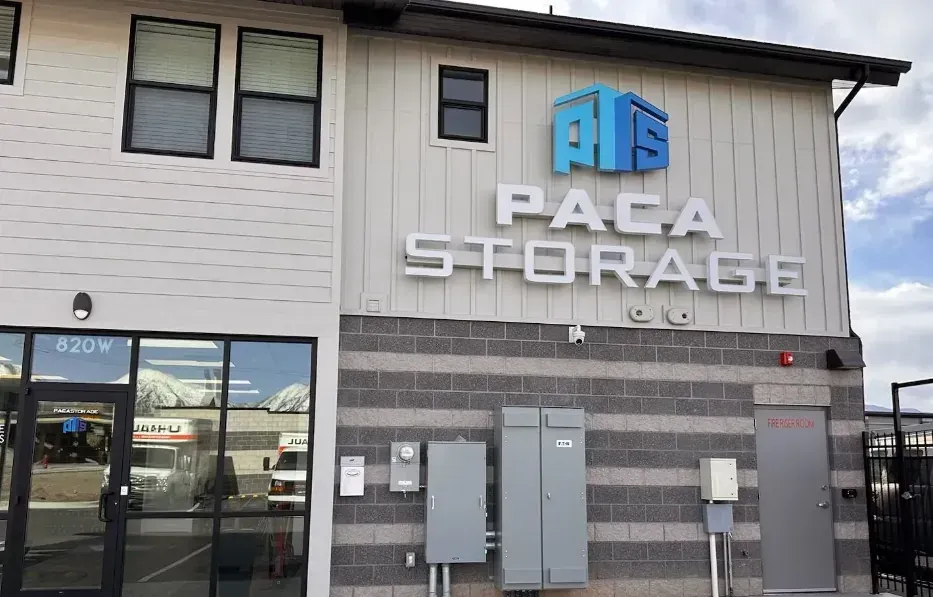
Climate-Controlled Storage Units in Payson, Utah
Utah's real threat to stored belongings isn't damp — it's a 69-degree annual temperature swing in air that's dry nearly every day of the year. Here's what that does, and what climate control prevents.
Most pages about climate-controlled storage units are written about humidity, mildew, and musty air. That copy was written for Florida, and it gets quietly reused by facilities in states where it doesn't apply. Payson, Utah has close to the opposite problem — and understanding which problem you actually have is the difference between paying for the right protection and paying for the wrong one.
If you're comparing the climate controlled storage units Payson Utah facilities advertise, the first thing worth knowing is how few of them are actually conditioned buildings. PACA Self Storage keeps the majority of our 325 units climate controlled, in sizes from 5x5 through 10x20, starting at $77 a month. This page explains what that actually buys you here, what genuinely needs it, and — just as usefully — what doesn't.
What Climate Control Actually Does
A climate-controlled unit sits inside an insulated, conditioned building. Ours are air conditioned through the summer and heated through the winter, running year-round to hold the interior within a moderate range instead of letting it track whatever is happening outside. That does two jobs at once: it protects what you're storing, and it makes the unit somewhere you can actually spend twenty minutes in July or January without rushing. That's the whole mechanism — it is not a vault, not a refrigerator, and not a sealed environment.
What it is, practically, is stability. A standard metal storage unit is essentially a shed: whatever the outside air does, the inside does too, amplified by sun on sheet metal. A climate-controlled unit flattens that curve. Almost everything that damages stored belongings is caused by the size and speed of the swing rather than by any single temperature.
Worth being precise about the terminology, because facilities use it loosely:
- Temperature controlled means heating and cooling only — air conditioning in summer, heat in winter. Common, and the bulk of the benefit in a dry climate like ours.
- Climate controlled usually implies temperature plus some humidity moderation, though the industry applies the label inconsistently.
- Humidity controlled means active dehumidification to a target. Rare, and largely aimed at humid regions.
If a facility can't tell you which of the three it offers, that's informative in itself. Ask what range they hold and whether the system runs year-round or seasonally.
Utah's Real Problem: The Swing, Not the Damp
Here are the numbers that matter for Payson specifically. The average July high is around 90°F. The average January low is around 21°F. That's a roughly 69-degree annual swing, and it doesn't account for the daily swing, which is pronounced at this elevation — cool mornings into hot afternoons, all summer long.
Then there's the sun. An uninsulated metal unit in direct summer sun doesn't sit at 90°F; it runs well above ambient, and interior temperatures north of 120°F are routine in unconditioned units across the Mountain West. Materials that are perfectly stable at 90°F begin to fail at 120°F. Adhesives soften. Vinyl and laminate lift. Candles, cosmetics, and anything wax-based deform. Electronics sit far outside their rated storage range.
And the humidity story here runs the other way from the standard copy. Payson is dry — muggy days are close to nonexistent across the entire year. That sounds like good news, and for mildew it is. But the recommended relative humidity for wood is roughly 40–60%, and persistently dry air sits below that band.
Wood is hygroscopic: it gives up moisture to dry air and physically shrinks as it does. The failure modes are well documented and, critically, largely irreversible :
- Checking and splitting — fine surface cracks that open along the grain as the wood contracts.
- Joint failure — the timber shrinks away from glue lines, and chairs, tables and bed frames go wobbly. This is why a piece that went into storage solid comes out loose.
- Veneer separation and popping — the substrate and the veneer move at different rates and delaminate.
- Warping and cupping — uneven moisture loss pulls flat panels out of true. Tabletops and door panels are the usual casualties.
- Leather drying and cracking — the same mechanism in a different material. Sofas, jackets, boots, book bindings.
- Paper embrittlement — documents and photographs become brittle enough to crack rather than fold.
None of that is fixable after the fact. A cracked veneer doesn't reabsorb; a failed glue joint has to be taken apart and re-glued. So in Payson the case for climate control isn't the mildew story you'll read elsewhere — it's a heat story and a dryness story, and both are more relevant here than the version everyone copies.
The one damp risk that is real here: anything you put in wet. A dry climate protects you from ambient moisture, not from a tent packed after rain or a rug cleaned last week. In a sealed unit that moisture has nowhere to go. Everything goes in bone dry, regardless of unit type.
What Belongs in a Climate-Controlled Unit
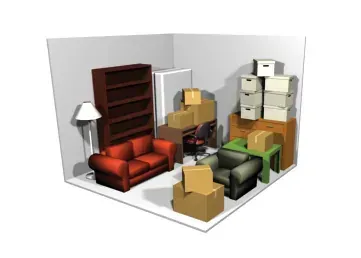
The simplest test: if the item is made of wood, leather, fabric, paper, or electronics — or if replacing it would cost more than a few hundred dollars — it belongs in climate control. Below is the longer version.
| What You're Storing | What Goes Wrong Without It | Verdict |
|---|---|---|
| Solid wood furniture | Shrinkage, splitting, loose joints | Yes |
| Veneered or antique furniture | Delamination, popped veneer, irreversible | Always |
| Leather sofas, jackets, boots | Drying, stiffening, surface cracking | Yes |
| Mattresses and upholstery | Adhesive breakdown, foam degradation in heat | Yes |
| Electronics and appliances | Heat beyond rated storage range; component stress | Yes |
| Photographs and documents | Embrittlement, curling, ink fade | Always |
| Musical instruments | Cracked soundboards, failed joints, ruined tuning | Always |
| Artwork and collectibles | Canvas tension changes, frame and finish damage | Always |
| Vinyl records and media | Warping above roughly 100°F | Yes |
| Candles, cosmetics, wax goods | Softening and deformation in summer heat | Yes |
| Wine and spirits | Heat spoilage; corks dry and shrink | Yes |
| Business records and inventory | Paper damage; heat-sensitive stock | Usually |
What Doesn't Need Climate Control
We'd rather you rent the right unit than the expensive one. Plenty of things are perfectly happy in a standard indoor or drive-up unit:
- Garden tools, hand tools, and yard equipment — metal and hard plastic don't care about the swing.
- Construction materials, lumber, and job-site supplies for short-term storage.
- Outdoor and camping gear — tents, packs, coolers, chairs. Built for weather by design, provided they go in dry.
- Patio furniture — metal, resin, and treated outdoor woods.
- Auto parts, tires, and hardware.
- Plastic totes of non-fragile goods — sports equipment, toys, kitchenware.
- Vehicles, RVs, boats, and trailers, which belong in parking spaces rather than conditioned units.
A common and sensible approach: rent one climate-controlled unit for the things that matter and a cheaper drive-up unit for the rest. Two smaller units frequently cost less than one large climate-controlled one, and everything ends up in the right conditions.
Is the Premium Worth It?
At our Payson facility, climate control adds roughly $10 to $20 a month over a standard indoor unit of the same size. A 5x5 goes from $67 to $77. A 10x10 goes from $115 to $135. A 10x20 goes from $164 to $184.
Run that against what's inside. Twenty dollars a month is $240 over a year. A single mid-range sofa costs more than that. A dining set costs several times more. A piano, a guitar collection, or a box of family photographs can't be priced at all, because the replacement doesn't exist.
The decision framework we'd actually use:
- Under three months? A standard unit is usually fine unless you're storing through peak summer, when heat alone justifies the upgrade.
- Three months to a year? Climate control for anything wood, leather, fabric, paper, or electronic. Standard for tools, gear, and hard goods.
- Over a year? Climate control for essentially everything you intend to use again. Long exposure is where the cumulative damage shows up.
- Irreplaceable at any duration? Climate control, without a calculation. The premium is trivial against the loss.
For the full rate table across every size and type, see storage units in Payson, Utah, or compare the total cost of ownership on our Utah storage cost guide.
Climate-controlled units from $77/mo
The majority of our 325 units are climate controlled — so you're not on a waitlist.
How to Tell If a Facility's Climate Control Is Real
"Climate controlled" is a marketing phrase before it's a specification. Four questions separate a real offering from a label:
What share of your units are climate controlled?
This is the one that matters most and the one nobody volunteers. A facility with twelve conditioned units, all occupied, is functionally not offering climate control. The majority of our 325 units are conditioned, which is why we can usually place you the same week you call.
Does the system run year-round?
Some facilities run cooling in summer and let the building coast through winter. In a climate with 21°F January lows, that's half a service. Freeze-thaw cycling is its own damage mechanism.
Is the unit interior, or an exterior unit with a vent?
Genuine climate control requires an insulated, conditioned building. An exterior metal unit with airflow added is ventilated, not conditioned, and it will still track the outside temperature.
Can I see the unit before I sign?
Walk into the building. You'll feel the difference between a conditioned corridor and a warm one in about three seconds. Any facility that won't show you the actual unit has told you something.
More on comparing facilities generally in our guide to self storage in Payson, UT.
Climate-Controlled Sizes at PACA
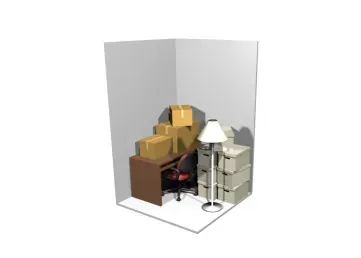
Conditioned units run from 5x5 through 10x20, so you can protect a single box of documents or an entire household without renting more space than you need.
- 5x5 — $77/mo. Documents, electronics, artwork, instruments, boxed valuables.
- 5x10 — $92/mo. A studio's worth of furniture, or one room cleared out properly.
- 10x10 — $135/mo. A one-bedroom apartment including sofa, bed, and dining set.
- 10x15 — $153/mo. A two-bedroom home with wood furniture and upholstery.
- 10x20 — $184/mo. A full household where the contents are worth protecting.
That range is deliberately wide: most facilities offering climate controlled storage units Payson Utah wide restrict conditioning to a couple of mid sizes, which forces you into more space than you need. Not sure which size? Our manager has sized thousands of moves and can usually tell you over the phone. See also small storage units and large storage units.
Location
PACA Self Storage
820 W Utah Ave
Payson, UT 84651
Phone
Office Hours
Monday–Saturday
9:30 a.m.–6:00 p.m.
Closed Sunday
Gate Access
24 hours a day, 7 days a week
for all tenants, with a personal keycode
Climate-Controlled Storage FAQs
What is the difference between climate-controlled and temperature-controlled storage?
Temperature controlled means heating and cooling only. Climate controlled generally implies temperature plus some humidity moderation, though the industry uses the terms loosely. Our units are air conditioned in summer and heated in winter, running year-round. Humidity controlled means active dehumidification to a target and is rare outside genuinely humid regions. In a dry climate like Payson's, temperature stability delivers most of the protective benefit.
How hot does a regular storage unit get during a Utah summer?
Far hotter than the outside air. Payson averages about 90°F in July, but an uninsulated metal unit in direct sun runs well above ambient, and interior temperatures above 120°F are routine in unconditioned units across the Mountain West. That's past the point where adhesives soften, vinyl and laminate lift, wax-based goods deform, and electronics sit outside their rated storage range.
Utah is dry — so why would I need climate control at all?
Because dry air is its own problem. The recommended relative humidity for wood is roughly 40 to 60 percent, and persistently dry air sits below that band. Wood gives up moisture and shrinks, which causes checking and splitting, glue joints to fail, veneer to delaminate, and panels to warp. Leather dries and cracks by the same mechanism, and paper becomes brittle. None of that damage reverses when conditions improve.
Is climate-controlled storage worth the extra cost?
At our Payson facility the premium is about $10 to $20 a month over a standard indoor unit of the same size — roughly $240 a year at the top end, which is less than a single mid-range sofa. As a rule: under three months a standard unit is usually fine; three months to a year, condition anything wood, leather, fabric, paper or electronic; over a year, condition essentially everything you plan to use again.
What should never go in a non-climate-controlled unit?
Antiques and veneered furniture, musical instruments, photographs and documents, artwork, vinyl records, electronics, leather goods, mattresses, and anything irreplaceable or sentimental. These either fail fastest or can't be replaced when they do.
What can I safely leave in a standard unit?
Hand and garden tools, yard equipment, construction materials, camping and outdoor gear, patio furniture, auto parts, tires, hardware, and plastic totes of non-fragile goods like sports equipment and kitchenware. Many customers rent one climate-controlled unit for valuables plus a cheaper drive-up unit for the rest — two smaller units often cost less than one large conditioned one.
Can I store a mattress in a standard storage unit?
You can, but we'd advise against it for anything beyond a few weeks. Summer heat degrades foam and breaks down the adhesives holding a mattress together, and a mattress is bulky enough that replacing it costs far more than the climate-control premium would have. Store it flat rather than on its side, and cover it with a breathable cover rather than plastic.
Are climate-controlled units also more secure?
Indirectly, yes. Climate-controlled units at our facility are interior units inside a building, so reaching one means passing the keycode gate and then the building itself. Every unit here sits behind the same perimeter fencing, camera coverage, lighting, and on-site manager regardless of type — but interior units add a layer by their construction.
Do you have climate-controlled units available right now?
Usually, yes. The majority of our 325 units are climate controlled, which is unusual — many facilities offer a handful and keep a waitlist. Sizes run from 5x5 at $77 a month through 10x20 at $184. Call (385) 327-5740 or check availability online for what's open today.
Are climate-controlled units more comfortable to work in?
Yes, and it's an underrated reason to choose one. Because the building is air conditioned in summer and heated in winter, sorting boxes or loading furniture is a normal task rather than something you rush through in 100-degree heat or freezing cold. If you expect to spend real time in your unit — rotating seasonal items, pulling business inventory, going through an estate — that comfort matters as much as the protection does.
How should I pack for a climate-controlled unit?
Everything goes in completely dry — a dry climate protects you from ambient moisture, not from something you stored wet. Cover furniture with moving blankets or breathable cloth rather than plastic, which traps moisture against the surface. Keep boxes off the concrete floor on pallets or totes, and leave a gap between stacked items so air can move.
Protect what's worth protecting
Climate-controlled units in Payson from $77/mo, month-to-month, with 24/7 gate access.





