
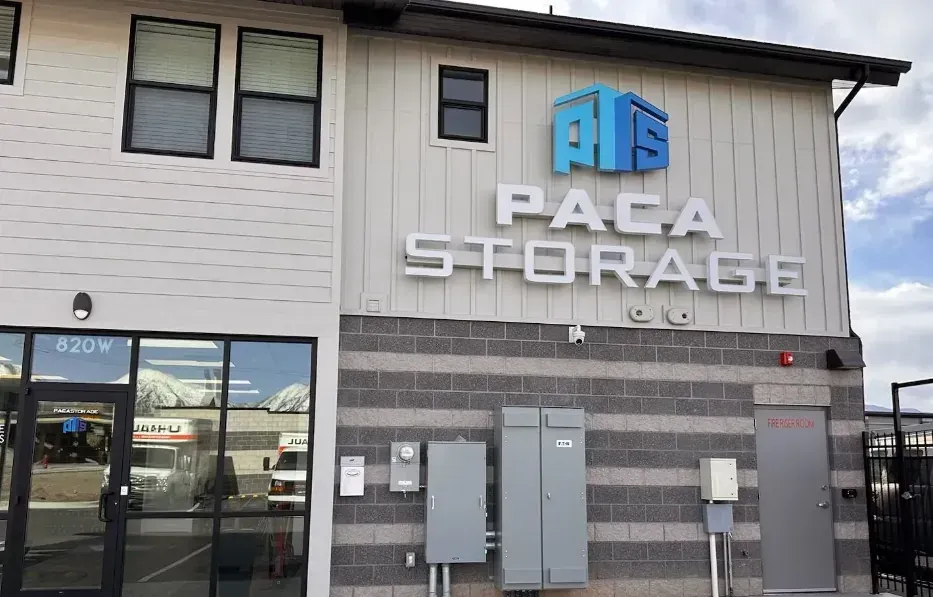
Boat Storage in Payson, Utah
Fifteen minutes from Utah Lake, paved and fenced, with 24/7 gate access so a dawn launch doesn't depend on anyone's office hours.
A boat is a summer object with a twelve-month parking problem. For most households in south Utah County it spends the season on the water and the other seven or eight months taking up the side of a driveway, blocking a garage, or quietly annoying an HOA.
Comparing boat storage Payson Utah options, the things worth weighing are surface, gate hours and how far you are from the water. Boat storage in Payson starts at $65 a month — paved, fully fenced, camera-monitored, with 24/7 keycode gate access and spaces for rigs up to 40 feet including the trailer. Utah Lake is about fifteen minutes north, and Payson Lakes is up the canyon, so the boat sits between your house and the water rather than behind it.
Boat Storage Options and Rates
| Space | Type | Typically Suits | Rate |
|---|---|---|---|
| 12' × 40' | Outdoor paved | Most runabouts, ski boats, fishing boats on trailers | $65/mo |
| 16' × 40' | Outdoor paved | Pontoons, wide beams, wake boats, boat plus tow vehicle | $75/mo |
| 12' × 50' | Outdoor paved | Long cruisers, boat left hitched to the truck | $80/mo |
| 12.75' × 40' | Fully enclosed | High-value boats, gelcoat and upholstery protection | $384/mo |
Measure the whole rig, not the boat. This is where people get caught out. Overall length means the trailer tongue at the front through to the outboard or swim platform at the back — which on a "19-foot" boat is frequently 24 feet on the trailer. Add a foot or two if you'd rather be able to walk around it. Pontoons in particular are wider than their length suggests and usually want the 16-foot-wide space.
Winterizing a Boat in Utah
Boats fail differently from RVs, and the failure that matters most is specific: water left anywhere in an engine, freezing, and cracking a block or manifold. That's an engine-replacement bill from a job you could have done in an afternoon.
Follow your engine manufacturer's procedure, which differs between outboards, sterndrives and inboards. In general terms:
The engine — the expensive one
Flush with fresh water, then stabilize the fuel and run it long enough to carry stabilizer through the whole system. Fog the cylinders. Change the engine oil and filter before storage rather than after — used oil is acidic and shouldn't sit for months.
On inboards and sterndrives, drain the block and manifolds completely, or fill with the correct antifreeze. This is the single most important step in a Utah winter. Payson's average January low is around 21°F, and a block full of water at that temperature cracks.
The lower unit
Drain and replace the gear oil. Then look at what came out: milky or cloudy oil means water has got past a seal, and storing it that way over winter turns a seal repair into a gearcase repair. Find that in October, not in May. Store the outdrive in the down position so any remaining water drains rather than sitting in it.
Every other water system
Bilge, livewells, raw-water washdown, freshwater tanks on cabin boats, and the head. Anything that holds water needs to be empty or protected. And leave the drain plug out — both so nothing accumulates over winter, and because Utah requires drain plugs removed during transport anyway.
Battery, canvas and hull
- Remove the battery and keep it somewhere it can be maintained on a trickle charger. Cold finishes off a battery left to slowly discharge.
- Get the canvas and upholstery completely dry before you cover anything. Vinyl seating trapped damp under a cover is how a boat grows mold over a winter — and mold on upholstery is far harder to undo than to prevent.
- Support the cover so water can't pool. A sagging cover collects snowmelt, and the weight will find a way in. If you shrink wrap, make sure it's properly vented — sealed wrap without ventilation traps moisture and creates the exact problem it was meant to prevent.
- Take the load off the tires if the boat will sit for months, and check the bunks or rollers are supporting the hull evenly. Long storage on poorly adjusted supports can distort a hull.
The trailer, which everyone forgets
It's half of what you're storing and it's the half that strands you on the way to the lake. Repack the wheel bearings, check tire pressure and sidewalls for cracking, test the lights, and inspect the safety chains and coupler. A bearing that failed quietly over winter announces itself on I-15 in June.
Utah's mussel rules and storage overlap neatly. The state requires boaters to clean, drain and dry — including removing all drain plugs and sea strainers during transport — and an annual mussel-aware boater course applies to every vessel, motorized or not, with an additional annual enrollment fee for motorized boats. Storing a boat properly means draining it completely and leaving it dry for months, which is the same thing. Do it once, at the end of the season, and you've satisfied both. Check current requirements with the Utah Division of Wildlife Resources before you launch, since fees and rules are updated annually.
Boat spaces from $65 a month
Paved, fenced, camera-monitored, month-to-month. Fifteen minutes from Utah Lake.
In-Season Storage Is a Different Problem
Most boat storage Payson Utah listings only address half the year. Winter storage is about protection. Summer storage is about access — and it's the half people don't plan for.
If the boat is out most weekends, what you need is to hitch up and go without a fuss: a paved surface so the jack doesn't sink, room to maneuver a trailer, and a gate that opens at 5 a.m. when you want to be on the water before the wind picks up. All three are standard here — 24/7 keycode gate access is included on every space at no extra charge, so nobody is waiting for an office to open. See 24-hour access storage.
A number of our boat tenants keep a space year-round for exactly this reason. It's $65 a month and it means the boat is never the thing blocking the garage — in July or January.
Is Enclosed Storage Worth It for a Boat?
Sometimes, and the reasoning is different from an RV. Boats have more exposed gelcoat per foot, more vinyl upholstery, and more chrome and stainless than a motorhome does — all of which the sun works on.
Enclosed makes sense when the boat is high-value, when a lot of its worth sits in gelcoat and upholstery condition, when you're planning to sell in the next couple of years, or when it's stored long-term rather than seasonally. Utah's UV at 4,700 feet oxidizes gelcoat to a chalky finish and cracks vinyl seating, and both are labor-intensive to put right.
Outdoor is the sensible answer for most trailered boats — a paved, fenced space at $65 plus a properly fitted, vented cover gets you a long way for a tenth of the price. Our enclosed 12.75' × 40' bay is $384 a month; the full argument is on indoor RV storage in Utah County, and it applies to boats equally.
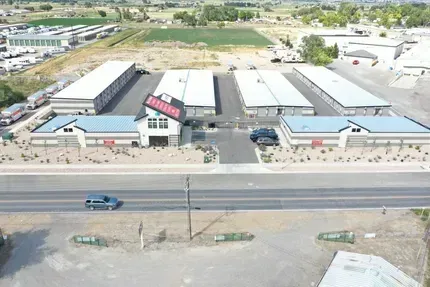
Stored Between the House and the Water
The argument for storing a boat away from home is that it shortens the trip rather than lengthening it.
Utah Lake is roughly fifteen minutes north of us, Payson Lakes is up the canyon, and I-15 Exit 250 is a minute away for anything further — Deer Creek, Jordanelle, Strawberry, or the long run south. If the boat lives in your driveway in Spanish Fork or Springville, a trip starts by driving home, hitching up, then driving back past Payson. Stored here, it starts at the gate.
More on that in boat storage near Utah Lake, and drive times from every nearby town are on storage units near me. We also store RVs, trailers and vehicles in the same spaces, and storage units from $67 if you need somewhere for gear, tubes and wetsuits as well.
Location
PACA Self Storage
820 W Utah Ave
Payson, UT 84651
Phone
Office Hours
Monday–Saturday
9:30 a.m.–6:00 p.m.
Closed Sunday
Gate Access
24 hours a day, 7 days a week
for all tenants, with a personal keycode
Boat Storage FAQs
How much does boat storage cost in Payson, Utah?
Outdoor paved spaces start at $65 a month for a 12x40, $75 for a 16x40 and $80 for a 12x50, all suitable for boats on trailers up to 40 feet overall. A fully enclosed 12.75x40 bay is $384. Everything is month-to-month with 24/7 keycode gate access included at no extra charge.
What size space do I need for a boat on a trailer?
Measure the complete rig — trailer tongue at the front through to the outboard or swim platform at the back. A "19-foot" boat is frequently 24 feet on its trailer. Most runabouts, ski boats and fishing boats fit a 12x40. Pontoons, wide-beam and wake boats are usually better in a 16x40, since they're wider than their length suggests. Take a 12x50 if you're leaving the boat hitched to the tow vehicle.
How do I winterize a boat for a Utah winter?
The critical step is water in the engine. Flush with fresh water, stabilize the fuel and run it through, fog the cylinders, and change the oil before storage. On inboards and sterndrives, drain the block and manifolds completely or fill with the correct antifreeze — Payson's average January low is around 21°F and a block full of water at that temperature cracks. Then drain the lower unit and replace the gear oil, empty every other water system, remove the battery, and get the canvas and upholstery fully dry before covering. Follow your engine manufacturer's specific procedure.
Should I leave the drain plug in or out during storage?
Out, always. It lets any water escape rather than accumulating over months, and Utah requires drain plugs to be removed during transport anyway as part of its aquatic invasive species rules. Put it somewhere you'll actually find it in spring — taped to the steering wheel is a common trick, for the obvious reason.
What does milky gear oil mean when I drain the lower unit?
Water has got past a seal. It's worth knowing in October rather than May, because storing a lower unit full of water and oil emulsion through a freezing winter turns a straightforward seal replacement into a much larger gearcase repair. If the oil comes out cloudy or milky, get it looked at before the boat goes into storage.
Is shrink wrap better than a cover?
Either works if it's done properly, and both fail the same way if it isn't. The requirement is ventilation and no pooling. Shrink wrap must be vented — sealed wrap traps moisture and creates the mold problem it was meant to prevent. A cover must be supported so snowmelt runs off rather than collecting, because a sagging cover full of water will eventually find its way in. Whatever you use, the canvas and upholstery underneath must be completely dry first.
Do I need to do anything to the trailer before storing?
Yes, and it's the half people skip. Repack the wheel bearings, check tire pressure and inspect sidewalls for cracking, test the lights, and check the safety chains and coupler. If the boat will sit for months, take the load off the tires. A bearing that quietly failed over winter tends to announce itself on the freeway in June.
Is enclosed storage worth it for a boat?
It depends on value and plans. Boats carry more exposed gelcoat, vinyl upholstery and brightwork per foot than a motorhome, and Utah's UV at 4,700 feet oxidizes gelcoat to a chalky finish and cracks vinyl — both labor-intensive to correct. Enclosed at $384 a month is worth it for high-value boats and anyone selling within a couple of years. For most trailered boats, a paved fenced space at $65 with a properly fitted vented cover is the better value.
Do I need registration and insurance to store a boat?
Yes — current registration and proof of insurance are required for any boat, trailer, RV or vehicle stored on the property. It's standard practice and it means everything parked here has an identifiable, contactable owner, which is part of why the lot stays orderly.
How close is Utah Lake?
About fifteen minutes north. Payson Lakes is up the canyon to the south-east, and I-15 Exit 250 is a minute from the gate for anything further afield — Deer Creek, Jordanelle or Strawberry. That's the practical argument for storing here rather than at home: the boat sits between your house and the water instead of behind it.
On the way to the lake, not in the driveway
Boat storage in Payson from $65/mo, month-to-month, with 24/7 gate access.





