
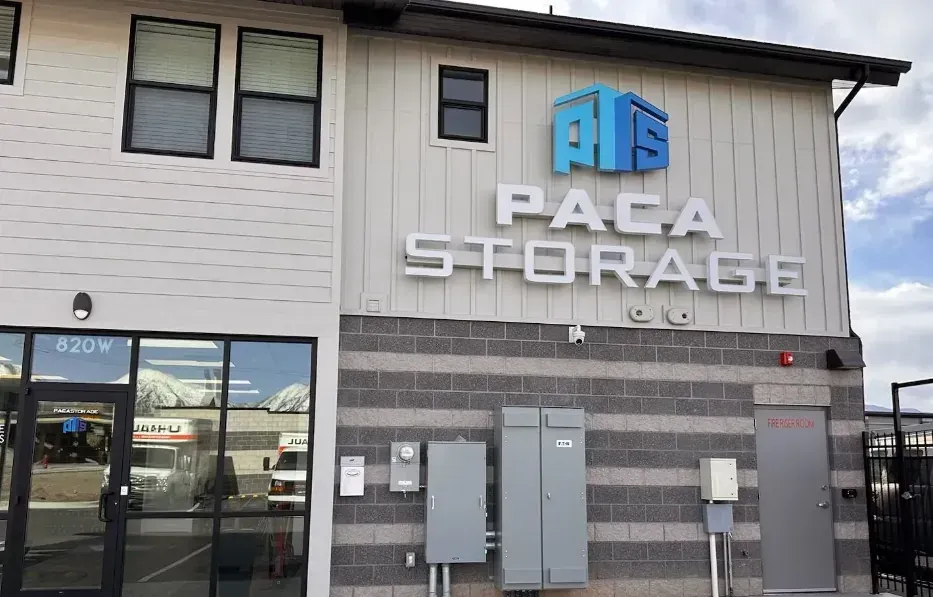
Vehicle Storage in Payson, Utah
Three ways to store a car, truck or motorcycle — an open paved space, an enclosed drive-up unit, or a fully enclosed bay. Plus how to put a vehicle away so it starts when you come back.
Storing a vehicle is different from storing an RV or a boat, and the difference is that you have a real choice about enclosure. A motorhome has to live outside or in a very large building. A car fits in a storage unit. That opens up a middle option most people never consider — and it's often the right one.
Most listings for vehicle storage Payson Utah shoppers find only offer an open lot. Vehicle storage in Payson here starts at $65 a month for an outdoor paved space — but that's only one of three choices. A drive-up 10x20 unit — four walls, a roll-up door, your own lock — is $174. The fully enclosed 12.75' × 40' bay is $384. All month-to-month, all with 24/7 keycode gate access.
Three Ways to Store a Vehicle
| Option | What It Is | Best For | Rate |
|---|---|---|---|
| Outdoor space | Paved, striped, fenced, camera-monitored | Work trucks, second vehicles, short-term, budget | $65–$80/mo |
| Drive-up 10x20 unit | Enclosed unit, roll-up door, your own lock | Classic cars, project vehicles, long-term, motorcycles | $174/mo |
| Enclosed 12.75x40 bay | Fully enclosed, large-vehicle sized | Oversized vehicles, high-value, storing car plus more | $384/mo |
The 10x20 drive-up unit is the option worth knowing about. At 200 square feet it takes a standard car or truck with room to walk around it, and you can stack boxes along the walls too. For $174 a month you get everything an enclosed bay offers — no UV, no hail, no snow load, no prying eyes — at less than half the price, because you're not paying for motorhome-sized clearance you don't need.
For a classic car, a project vehicle, or anything going away for a year, that's the sweet spot. For a work truck that just needs to be somewhere other than your driveway, the $65 outdoor space is the sensible answer. More on the unit option in drive-up storage units and large storage units.
Who Stores a Vehicle
Almost always one of two situations: the vehicle is going to be unused for a while, or there's simply nowhere at home to put it.
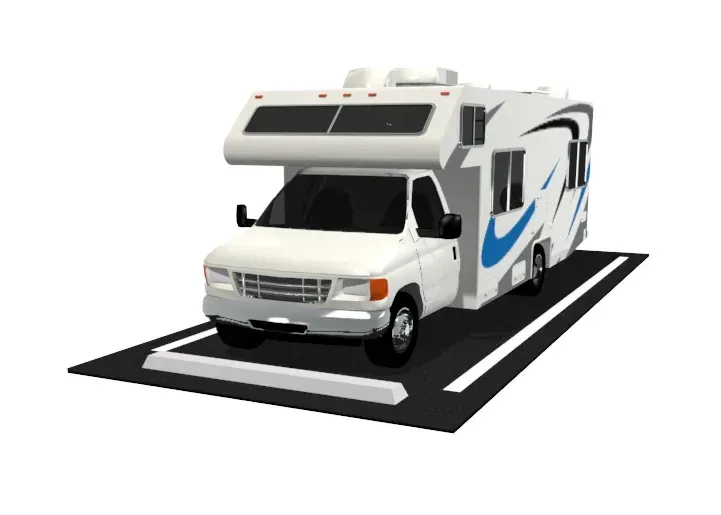
Deployment and extended travel
A vehicle that needs to sit safely for six months or a year while you're elsewhere. Month-to-month terms matter here, because deployments and postings extend and nobody wants a storage contract to be the inflexible part.
Classic and project vehicles
The most common reason people upgrade from an outdoor space to a unit. A restoration that lives in the garage is a restoration that displaces two cars — and sun, hail and temperature swings are exactly what you're trying to keep off fresh paint and chrome.
Seasonal vehicles
Convertibles and sports cars that come out in May, and 4x4s and plow trucks that earn their keep in January. Storing the off-season vehicle costs less than most people's monthly fuel bill.
Second and third vehicles
A teenager's car before they're driving, a spare truck, an inherited vehicle nobody's decided about. All of them tend to end up on the street, which in a lot of neighborhoods is where the friction starts.
Reclaiming the garage
The straightforward one. If a rarely used vehicle is why the daily driver sits outside all winter, moving it here for $65 a month is a trade most households make happily.
Estates and transitions
A vehicle that needs somewhere secure while probate, a sale or a family decision works itself out. No fixed term means no pressure on a timeline nobody controls.
Outdoor from $65, enclosed unit from $174
Month-to-month, 24/7 keycode access, on-site manager.
How to Store a Vehicle So It Starts Again
This is the part vehicle storage Payson Utah listings never cover. A car left for six months without preparation typically comes back with a dead battery, flat-spotted tires, stale fuel and something living in the air box. Two hours of work prevents all of it.
Fuel — fill it, don't drain it
The opposite of the advice for lawnmowers. Fill the tank to around ninety percent and add fuel stabilizer, then run the engine long enough to draw treated fuel through the lines. A full tank leaves little room for the air that causes condensation and water in the fuel.
Oil and fluids
Change the oil and filter before storage. Used oil is acidic and shouldn't sit in an engine for months. Top up coolant and check it's rated for the temperature — Payson's average January low is around 21°F.
Battery
Either disconnect the negative terminal or, better, connect a battery maintainer if you have power available. A modern car draws current even switched off, and a battery left to discharge slowly in the cold is usually finished by spring. If you can't do either, plan to bring a jump pack when you collect it.
Tires and flat-spotting
A tire holding the same load in the same spot for months develops a flat spot — a vibration that may work out after a few miles, or may not. Inflate to the maximum pressure on the sidewall before storage, since tires lose pressure over time and an underinflated tire flat-spots faster. If it's practical, roll the vehicle a few feet every month or two.
Parking brake off
Counterintuitive, but leave it off. Brake pads left clamped against rotors for months can seize, particularly in damp or cold conditions. Use wheel chocks instead — a few dollars, and no risk of a brake that won't release.
Rodents
The most common storage surprise, and worth taking seriously. Remove every trace of food and rubbish, vacuum the interior thoroughly, and don't leave paper or fabric that makes good nesting material. When you come back, check under the hood before you turn the key.
Wash it first, and cover it properly
Bird droppings, tree sap and road salt etch paint if left for months — wash and dry the vehicle before storage rather than after. Use a breathable car cover, never a tarp: tarps trap moisture against the paint and do more damage than the weather they're keeping off.
An easy one people miss: ask your insurer about reduced coverage while a vehicle is in storage. Many will let you drop collision and keep comprehensive on a vehicle that isn't being driven, which can be a meaningful saving over a year. Check with us first that the reduced policy still satisfies our requirement — we need current registration and insurance on anything stored.
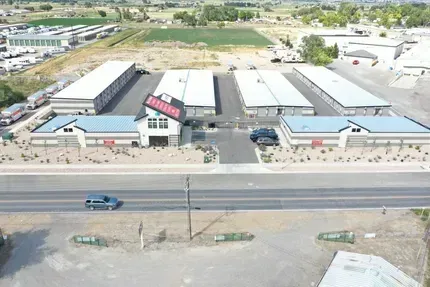
Leaving a Vehicle Somewhere You Won't Visit
A stored vehicle is unattended for longer than almost anything else people store, which puts the weight on the property rather than on you checking in.
- Full perimeter fencing with a single keycode-controlled entry point.
- Security cameras covering the gate and drive aisles.
- Every gate entry logged against the code that opened it, so access is attributable rather than anonymous.
- Lighting across the property, not only near the office.
- Paved throughout — no ruts forming under a vehicle that sits for months, and no mud through spring.
- An on-site manager during the day, which is the part a remotely run lot cannot offer.
- In a drive-up unit, you add a roll-up door and your own lock, and nobody can see what's inside at all.
More on access control in 24-hour access storage, and on the freeway approach in storage near I-15.
What We Need, and What Isn't Allowed
- Current registration and proof of insurance on anything stored — vehicle, trailer, boat or RV. It's standard, and it means everything on the property has an identifiable, contactable owner.
- Keep the registration current while it's stored. A vehicle doesn't stop needing registration because it isn't being driven, and letting it lapse creates a problem when you come to collect and move it.
- No mechanical work on site. You can access the vehicle, start it, put a maintainer on the battery and load or unload as often as you like. Oil changes, fluid work and repairs aren't permitted, for environmental reasons and because the lot is shared space.
- Fuel levels. Keep them sensible — a full tank for long-term storage in an outdoor space is fine, but tell us what you're planning if you're storing anything unusual.
- Non-running vehicles. Talk to us first. A vehicle that can't be moved under its own power changes what's practical, and we'd rather sort it out before it arrives than after.
Location
PACA Self Storage
820 W Utah Ave
Payson, UT 84651
Phone
Office Hours
Monday–Saturday
9:30 a.m.–6:00 p.m.
Closed Sunday
Gate Access
24 hours a day, 7 days a week
for all tenants, with a personal keycode
Vehicle Storage FAQs
How much does vehicle storage cost in Payson, Utah?
An outdoor paved space starts at $65 a month, with 16x40 at $75 and 12x50 at $80. An enclosed drive-up 10x20 unit is $174, and the fully enclosed 12.75x40 bay is $384. Everything is month-to-month with no long-term contract, and 24/7 keycode gate access is included at no extra charge.
Should I store my car outdoors, in a unit, or in the enclosed bay?
Outdoors at $65 is right for work trucks, second vehicles and shorter stays. A drive-up 10x20 unit at $174 is the value option for classic cars, project vehicles and anything going away long-term — you get full enclosure, a roll-up door and your own lock at under half the price of the large bay, because you're not paying for motorhome clearance. The $384 bay makes sense for oversized vehicles or when you want to store a car plus a lot else.
How do I prepare a car for months of storage?
Fill the tank to around ninety percent and add fuel stabilizer, then run the engine to circulate it. Change the oil and filter before storage rather than after. Disconnect the battery or fit a maintainer. Inflate tires to maximum sidewall pressure. Leave the parking brake off and use chocks. Remove all food and rubbish and vacuum thoroughly against rodents. Wash and dry the vehicle first, and cover it with a breathable car cover rather than a tarp.
Should I disconnect the battery or use a maintainer?
A maintainer is better if you have power available, since it keeps the battery at full charge rather than just slowing the discharge. If not, disconnect the negative terminal — a modern car draws current even switched off, and a battery left to slowly discharge through a Utah winter is usually finished by spring. If you can do neither, plan on bringing a jump pack when you collect it.
What is tire flat-spotting, and how do I prevent it?
A tire that holds the same load in the same position for months develops a flattened contact patch, which shows up as a vibration when you drive again. It sometimes works out after a few miles and sometimes doesn't. Inflate to the maximum pressure marked on the sidewall before storage — tires lose pressure over time and an underinflated tire flat-spots faster — and roll the vehicle a few feet every month or two if that's practical.
Should I leave the parking brake on while it's stored?
No. Brake pads left clamped against rotors for months can seize, particularly in cold or damp conditions, and a brake that won't release is a genuinely annoying way to start a collection day. Leave the parking brake off and use wheel chocks instead — they cost a few dollars and carry no risk.
Do I need to keep full insurance on a stored vehicle?
You need current insurance to store here, but many insurers will let you reduce coverage on a vehicle that isn't being driven — typically dropping collision while keeping comprehensive, which still covers theft, fire and weather. Over a year that can be a meaningful saving. Ask your insurer what they offer, then check with us that the reduced policy still meets our requirement before you change anything.
Can I store a vehicle while I'm deployed or traveling long-term?
Yes, and it's one of the most common reasons people rent a vehicle space. Everything is month-to-month with no long-term commitment and no early-termination fee, which suits a timeline that might extend. Add an authorized user before you go — a family member or friend gets their own gate code, so someone can check on the vehicle or collect it if plans change.
Do you store motorcycles?
Yes. A motorcycle fits comfortably in a drive-up 10x20 unit with room for gear and boxes alongside, which is what most riders choose for winter storage — full enclosure and your own lock for $174 a month. Two or three bikes fit in the same unit. Current registration and insurance are required, and the same preparation applies: stabilizer in the fuel, battery on a maintainer, tires up to pressure.
What if my registration expires while the vehicle is stored?
Keep it current. A vehicle doesn't stop needing registration because it isn't being driven, we require current registration on anything stored on the property, and an expired registration creates a real problem on the day you want to drive it away. Utah registration can be renewed online, so it's worth setting a reminder before you store anything long-term.
Somewhere safe until you need it
Vehicle storage in Payson from $65/mo outdoors, or $174 fully enclosed.





