
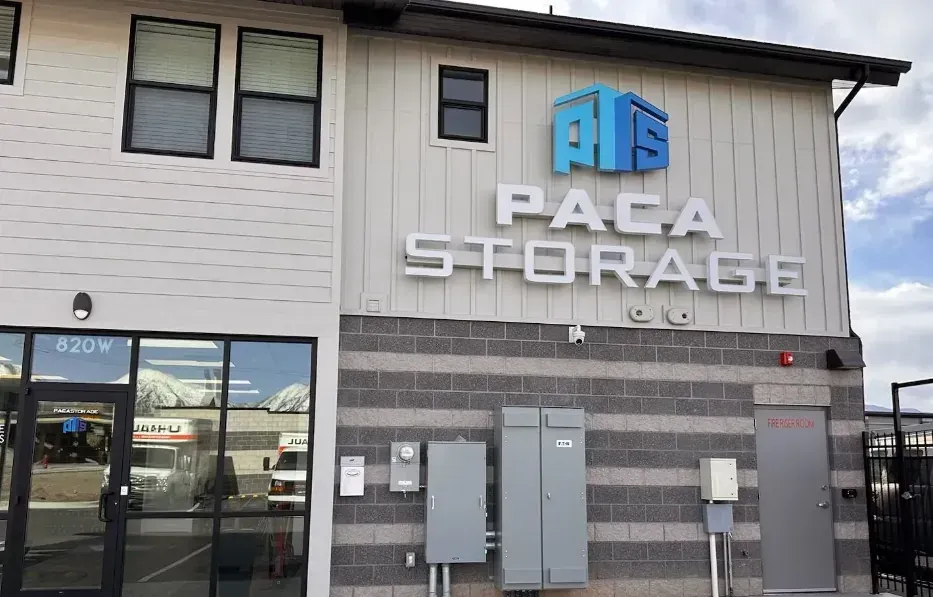
RV Storage in Payson, Utah
Paved, fenced, camera-monitored spaces for rigs up to 40 feet — one minute off I-15, at the mouth of Payson Canyon, fifteen minutes from Utah Lake.
A motorhome spends about three weeks a year being used and forty-nine weeks being parked. For most households in south Utah County, that parking is the actual problem — a rig in the driveway blocks a garage, irritates the HOA, and in a lot of neighborhoods isn't permitted for more than a few days at a stretch anyway.
Comparing rv storage Payson Utah options, the differences that matter are surface, security and access hours rather than headline rate. RV storage in Payson starts at $65 a month at PACA Self Storage — paved, fully fenced, covered by cameras and lit throughout, with 24/7 keycode gate access so you can hitch up at four in the morning without calling anybody. Spaces accommodate rigs up to 40 feet, and there's a fully enclosed indoor bay for owners who want four walls and a roof.
RV Storage Options and Rates
| Space | Type | Typically Suits | Rate |
|---|---|---|---|
| 12' × 40' | Outdoor | Travel trailers, Class C motorhomes, work trucks | $65/mo |
| 16' × 40' | Outdoor | Wide fifth wheels, rigs with slide-outs, boat on trailer | $75/mo |
| 12' × 50' | Outdoor | Long Class A motorhomes, toy haulers, truck-and-trailer combos | $80/mo |
| 12.75' × 40' | Fully enclosed indoor | Class A motorhomes, high-value rigs, year-round protection | $384/mo |
The gap between $65 and $384 is the whole decision, and it's a real one rather than an upsell. Outdoor is the right call for the large majority of rigs — it's secure, it's paved, and at $780 a year it costs less than a couple of nights in a resort. Enclosed makes sense when the rig is worth protecting from Utah's sun and hail specifically, which is a real consideration for a six-figure Class A. More on that in indoor RV storage in Utah County.
Which Space Does Your Rig Need?
Measure your rig's overall length — bumper to bumper including the hitch, the spare, and any rear-mounted rack — not the model number. A "32-foot" trailer is frequently 35 feet in reality.
- Pop-up and tent trailers(roughly 8–16 ft) — a 12x40 with room to spare. The cheapest option we have, and considerably better than a driveway.
- Travel trailers(16–35 ft) — a 12x40 covers most. Go to 16x40 if yours has slide-outs that need clearance, or if you'd rather have room to walk around it.
- Fifth wheels(25–40 ft) — usually a 16x40, because fifth wheels are both longer and wider than their nominal length suggests once the pin box is included.
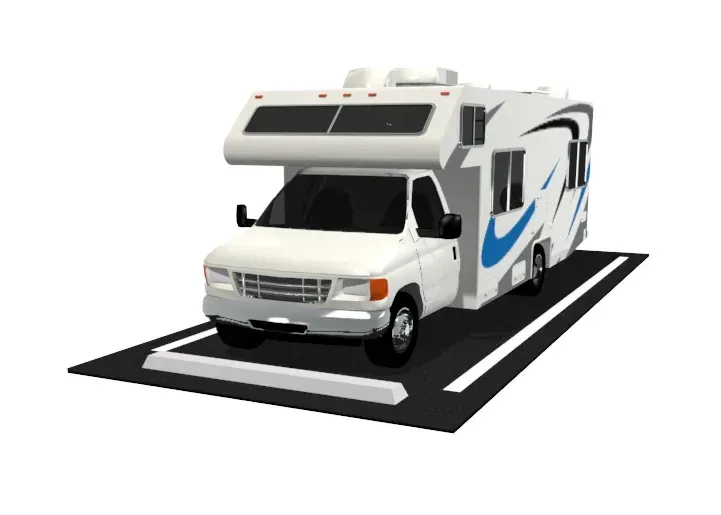
- Class C motorhomes(20–33 ft) — a 12x40 is normally right.
- Class A motorhomes(26–45 ft) — a 12x50 for anything over about 38 feet. Rigs beyond 40 feet overall may not fit; call before booking.
- Class B camper vans(17–24 ft) — a 12x40 comfortably, and worth considering the enclosed bay given how much of a van's value is in the finish.
- Toy haulers — a 12x50, since the ramp and cargo area push overall length up.
- Truck-and-trailer left hitched — measure the combination and take a 12x50.
The one measurement people get wrong: width with slide-outs retracted is what matters for a 12-foot space, but you also need room to open a door and walk the rig. If you're within a foot of the limit, take the wider space — it costs $10 more and saves you a permanent irritation.
Why Payson RV Owners Stop Parking at Home
Almost every conversation about rv storage Payson Utah owners have with us starts the same way: the rig has been in the driveway and something has made that untenable.
- HOA covenants. A great deal of newer housing across south Utah County restricts long-term recreational vehicle parking, and enforcement has tightened as neighborhoods have filled in.
- City ordinances. Rules on how long a recreational vehicle can sit on a public street vary by municipality and are worth checking for your own address rather than assuming.
- The garage. A rig in the driveway usually means a car isn't in the garage, which through a Utah winter is a daily cost paid in scrapers and cold seats.
- Sun. Payson sits at about 4,700 feet, and UV at altitude is unforgiving on roof membranes, sealants, decals and tires. A driveway offers no protection at all.
- Security. A driveway is visible from the street, unmonitored, and unlit. A fenced lot with a keycode gate and cameras is a different proposition.
At $65 a month, the arithmetic usually settles itself. That's roughly $2 a day to get your driveway back, your garage back, and your rig out of the sun.
RV spaces from $65 a month
Paved, fenced, camera-monitored, with 24/7 keycode access. Month-to-month.
Preparing an RV for Storage in Utah
Utah's winter is genuinely hard on a stored rig, and almost all of the expensive damage is preventable in an afternoon. This is the general checklist — always follow your own manufacturer's guidance, since systems differ.
Water — the one that causes real damage
Freezing water splits pipes, pumps and water heaters, and it's the single most common winter-storage repair bill. Drain the fresh water tank, the water heater and the low-point drains completely. Then either blow the lines out with compressed air or run non-toxic RV antifreeze through them. Don't skip the water heater bypass. Empty and flush both the black and grey tanks, and leave valves as your manual directs.
Fuel and engine
Add fuel stabilizer and run the engine or generator long enough to circulate it through the whole system. Change the oil before storage rather than after — used oil is acidic and shouldn't sit in an engine for months.
Battery
Cold kills batteries that are left to slowly discharge. Disconnect it, or remove it entirely and keep it somewhere it can be maintained on a trickle charger. A battery stored at partial charge in freezing conditions can be dead by spring.
Tires and suspension
Inflate to the pressure marked on the sidewall, then check periodically over the storage period. If the rig will sit for months, tire covers are cheap protection against UV cracking, which at this elevation is not a theoretical concern.
Interior and pests
Remove every scrap of food, including anything sealed. Clean thoroughly, empty the fridge and prop the door open, and leave nothing damp. Rodents are the second most expensive storage problem after frozen pipes, and they're looking for food and nesting material.
Seals, vents and exterior
Check roof and window sealant before the rig goes in — a small gap becomes water damage over a winter. Retract awnings fully, close vents, turn propane off at the tank, and give the exterior a wash so contaminants aren't sitting on the finish for months.
Then come back and check on it. Because you have 24/7 gate access, a fifteen-minute visit every six weeks over winter costs you nothing and catches the problems that turn into bills. Most people never do it. The ones who do are rarely the ones with a surprise in April.
Access, Security and Getting Out Early
RV owners use a storage facility differently from unit tenants. You come rarely, you come at odd hours, and when you come you need to get a large vehicle in and out without a fuss.
- 24/7 keycode gate access — leaving at 4 a.m. for the canyon or a long haul south is the normal case, not the exception. There's nobody to notify and nothing to book. See 24-hour access storage.
- Paved throughout — no gravel to churn up under a heavy rig, no mud in March, no dust settling on a clean exterior all summer.
- Room to maneuver — aisles sized for a 26-foot truck, so a fifth wheel and tow vehicle can be positioned without a spotter.
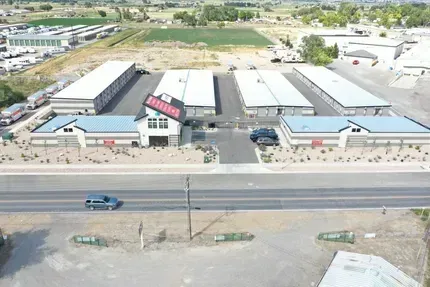
- Full perimeter fencing with one controlled entry, security cameras on the gate and drive aisles, and lighting across the property.
- An on-site manager during the day — someone who notices when something is off, which no unstaffed lot can offer.
- Registration and insurance required on any stored vehicle. That's standard, and it's part of why the lot stays what it is.
Stored Where You Actually Use It
There's a particular advantage to storing a rig in Payson rather than closer to home, and it isn't price. The canyon is right here. Payson Canyon, the Nebo Loop and Payson Lakes all start minutes from the gate, and Utah Lake is about fifteen minutes north. I-15 Exit 250 is a minute away for anything further afield.
Stored here, a trip starts by hitching up and driving out. Stored at home in Springville or Spanish Fork, it starts by driving home, hitching up, then driving back past Payson on the way out. Over a season that's real time. Drive times from every nearby town are on our storage units near me page, and the freeway angle is covered on RV storage near I-15.
We also store boats, trailers and vehicles in the same spaces, and if you need enclosed storage of household items alongside, storage units start at $67.
Location
PACA Self Storage
820 W Utah Ave
Payson, UT 84651
Phone
Office Hours
Monday–Saturday
9:30 a.m.–6:00 p.m.
Closed Sunday
Gate Access
24 hours a day, 7 days a week
for all tenants, with a personal keycode
RV Storage FAQs
How much does RV storage cost in Payson, Utah?
Outdoor RV spaces at PACA Self Storage start at $65 a month for a 12x40, $75 for a 16x40 and $80 for a 12x50. A fully enclosed indoor bay at 12.75x40 is $384 a month. All are month-to-month with no long-term contract, and every space includes 24/7 keycode gate access at no extra charge.
What size space does my RV need?
Measure overall length bumper to bumper, including the hitch, spare and any rear rack — a "32-foot" trailer is often 35 feet in reality. As a guide: pop-ups, travel trailers and Class C motorhomes usually fit a 12x40; fifth wheels and rigs with slide-outs are better in a 16x40; Class A motorhomes over about 38 feet and toy haulers need a 12x50. If you're within a foot of a limit, take the wider space.
Can you store a 40-foot motorhome?
Yes — a 12x50 space handles rigs up to 40 feet overall. Beyond 40 feet we may not be able to accommodate you, so call with your actual measured length before booking rather than relying on the model designation. Our on-site manager can tell you in a minute whether it will work.
Can I get to my RV whenever I want?
Yes. Every tenant gets a personal keycode for 24-hour gate access, seven days a week including holidays, at no extra cost. Leaving at 4 a.m. for the canyon or a long drive south is entirely normal here — there's nobody to notify and nothing to arrange in advance. The office keeps separate hours for paperwork and questions.
How do I prepare my RV for winter storage in Utah?
The critical one is water: drain the fresh tank, water heater and low-point drains completely, then blow the lines out or run non-toxic RV antifreeze through them, and empty and flush both waste tanks. Add fuel stabilizer and run it through the system, change the oil, disconnect or remove the battery, inflate tires to sidewall pressure, remove all food, prop the fridge open, retract awnings, turn propane off at the tank and check roof seals. Follow your manufacturer's guidance for your specific systems.
What's the difference between outdoor and enclosed RV storage?
Outdoor spaces are paved, striped, fenced and camera-monitored, but open to the weather — the right choice for most rigs at $65 to $80 a month. The enclosed bay at 12.75x40 puts four walls and a roof between your rig and Utah's sun, hail and winter for $384 a month. Enclosed makes sense for high-value motorhomes where UV damage to seals, decals and fiberglass is the real concern.
Do I need registration and insurance to store an RV here?
Yes. Current registration and proof of insurance are required for any vehicle, RV, boat or trailer stored on the property. It's standard across the industry and it's part of what keeps the lot orderly — it means everything parked here has an identifiable, contactable owner.
Can I work on my RV while it's stored?
You can access it, load it, unload it and check on it as often as you like. What a storage lot isn't is a workshop — mechanical repairs, fluid changes and similar work aren't permitted on site, both for environmental reasons and because a lot is a shared space. Loading up before a trip or winterizing your own water system is fine; an oil change is not.
Is outdoor RV storage secure?
Our lot is fully fenced with a single keycode-controlled entry point, covered by security cameras on the gate and drive aisles, lit across the property, paved throughout, and staffed by an on-site manager during the day. Every gate entry is logged against the code that opened it. That's a materially different proposition from a driveway, which is visible from the street, unmonitored and unlit.
Can I store my RV for just a few months?
Yes. Spaces are month-to-month with no long-term commitment and no early-termination fee, which suits seasonal storage exactly — in for the winter, out for the summer, or the reverse if you're a summer-only user. Many of our RV tenants store for six to eight months a year and nothing for the rest.
Get the driveway back
RV storage in Payson from $65 a month, month-to-month, minutes from the canyon and I-15.





