
How Much Does a Storage Unit Cost in Utah?
Real Utah averages by size, what actually drives the differences, and the costs that never appear in the advertised rate.
If you have searched for how much does a storage unit cost in Utah, you have probably seen two numbers that cannot both be right: an advertised rate of nineteen or twenty dollars, and a quote somewhere north of a hundred. Both are real. They are just answering different questions.
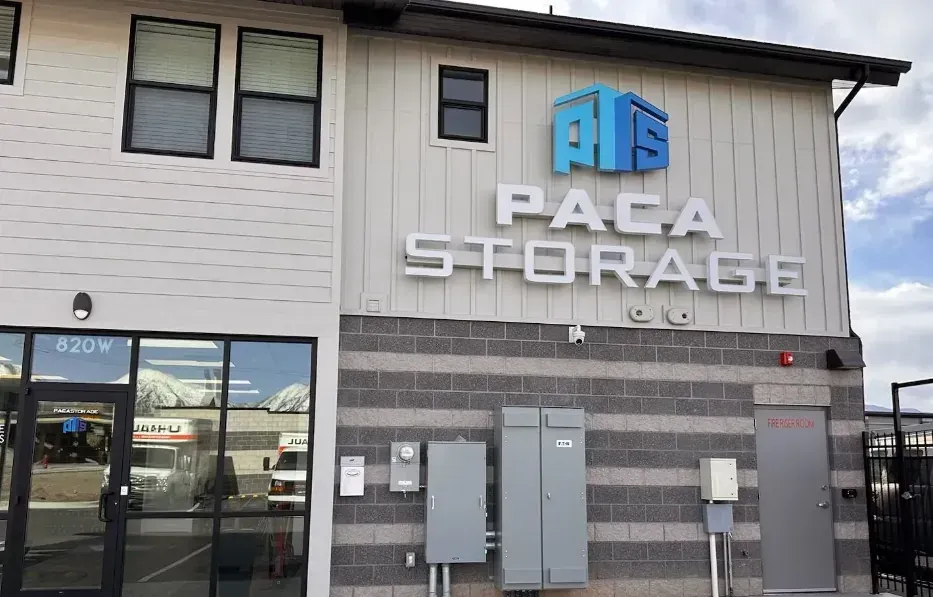
This page gives the actual figures, explains the gap, and lists the costs that sit outside the monthly rate. We run a facility in Payson and publish every one of our own rates, so there is a commercial interest here — but the numbers below are statewide, sourced, and not ours.
What Storage Actually Costs in Utah
These are averages across 385 facilities in 37 Utah cities, covering interior, drive-up and climate-controlled units together.
| Size | Utah average / month | Roughly holds |
|---|---|---|
| 5x5 | $42 | A large closet — boxes, seasonal items |
| 5x10 | $61 | A studio apartment, or the contents of a basement shelf wall |
| 10x10 | $100 | A two-bedroom home including appliances |
| 10x15 | $120 | A three-bedroom home |
| 10x20 | $151 | A four-bedroom home, or a vehicle plus boxes |
Notice the shape of that curve. A 10x20 gives you four times the floor area of a 10x10 for about one and a half times the price. Storage gets cheaper per square foot as it gets bigger, every time, everywhere. That is worth knowing — but it is not an argument for renting large, for reasons we come back to below.
Why the Advertised Price Is Never the Price
Search any Utah city and you will find storage advertised "from $19" or "from $21." Those numbers are real. They are also, almost without exception, the cheapest single unit at the cheapest facility in town.
Usually that means a 5x5 locker, an upstairs unit with no elevator, or an introductory rate that applies to the first month and then steps up to something else entirely.
The honest way to compare facilities is to ignore the headline entirely and ask three questions:
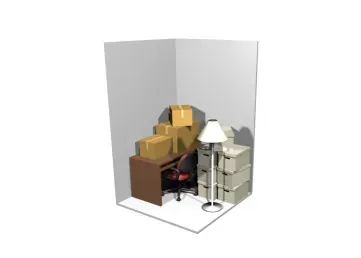
- What does the size I actually need cost? Not the cheapest unit — the one that fits your things. For most households that is a 10x10 or larger.
- Is that the ongoing rate or an introductory one? And if introductory, what does it become, and when?
- What is the total due at signing? That is where the fees live.
The Five Things That Move the Price
Two units of identical size at two facilities twenty minutes apart can differ by fifty percent. These are the reasons, roughly in order of impact.
1. Land cost, expressed as location
Storage rates track what the ground underneath is worth. That is why Salt Lake City and Provo run higher than the rural end of the state for exactly the same box, and it is the single largest driver of regional variation in Utah.
2. Drive-up versus interior
A drive-up unit typically adds about $10 a month over the equivalent interior unit. You are paying for the ability to park at the door, which matters enormously if you are moving heavy things without help and matters not at all if you are storing boxes you will not touch for a year.
3. Climate control
Adds roughly $10 to $20 a month depending on size. Whether that is worth it in Utah is a more interesting question than the industry usually admits — see below.
4. Floor level and access
Ground floor costs more than upstairs, and a facility with a freight elevator charges differently from one without. An upstairs unit at a discount is genuinely cheaper; it is also genuinely harder on moving day.
5. Whether anyone is actually there
A paved, fenced, camera-monitored site with a manager on the premises costs more to operate than an unstaffed gravel lot, and prices accordingly. That difference is real value or not depending on what you are storing and for how long.
Every one of our rates is published
Seventeen configurations, all listed, no quote required. First month free.
Climate Control in Utah: A Different Argument
Nearly every storage company in the country sells climate control on humidity and mildew. In Utah that argument is close to meaningless, because the state is dry almost year-round and mildew is not the threat it is in Houston or Atlanta.
The real Utah case is temperature swing. Utah County routinely moves close to 70 degrees between a summer afternoon and a winter night. Repeated expansion and contraction on that scale is what opens joints in solid wood furniture, warps vinyl records, shortens the life of batteries and electronics, and eventually lets glue go.
So the decision is genuinely about contents rather than climate anxiety. Patio furniture, tools, garden equipment and plastic bins do not care. Wooden furniture, instruments, photographs, documents, electronics and anything with adhesive in it do. Our climate-controlled storage page goes through the specifics.
The Costs That Are Not in the Monthly Rate
None of these are unusual and none are dishonest. They are simply not in the number on the sign, and comparing two facilities on the monthly rate alone will mislead you.
- Administration fee. A one-time charge at signing is standard across much of the industry.
- A lock. Some facilities require a specific type; some sell you one; some let you bring your own.
- Tenant insurance or a protection plan. Often mandatory, sometimes satisfied by your existing homeowner's or renter's policy if you can show proof.
- Late fees. Worth knowing the grace period before you need it rather than after.
- Rate reviews. Increases after the first six to twelve months are common practice, which means the cheaper opening quote is not always the cheaper two-year cost.
One question that settles all of it: ask for the total due at signing and the total due every month after that, in writing. Any facility worth renting from will give you both without hesitating. If you get a runaround on that question, you have learned something useful.
What We Charge in Payson
For transparency, and so you can compare against the statewide figures above rather than take our word for anything. These are the ongoing rates, not introductory ones.
| Size | Type | Our rate | Utah average |
|---|---|---|---|
| 5x5 | Indoor | $67 | $42 |
| 5x10 | Indoor | $72 | $61 |
| 10x10 | Indoor | $115 | $100 |
| 10x10 | Drive-Up | $125 | — |
| 10x15 | Indoor | $133 | $120 |
| 10x20 | Indoor | $164 | $151 |
| 12x40 | Parking | $65 | — |
We are not going to pretend those are the lowest numbers in the state, because they are not. The statewide average blends in unstaffed rural lots and upstairs units, and it is not a like-for-like comparison with a paved, fenced, camera-monitored site with a manager on it. What we will say plainly is that every rate is published rather than quoted, they are ongoing rates rather than teasers, and every unit is month-to-month with no term to break. If price is the deciding factor, the full breakdown is on our storage pricing page.
How to Pay Less Without Renting the Wrong Thing
Three things genuinely reduce the bill. None of them is haggling.
- Pack upward. Units are priced by footprint, so the height is already paid for. A 10x10 packed to the ceiling holds far more than most people get into a 10x15 stacked waist-high, and the difference is about $18 a month.
- Skip drive-up if you will not use it. The $10 premium is excellent value if you are hauling furniture alone and dead money if you are storing boxes for a year. Our small unit guide and large unit guide show what fits in each.
- Review it at six months. This is the saving almost nobody takes. Households rent for the volume they had on move-in day, clear half of it out over the following months, and never revisit the size. If your unit looks empty, ask about moving down.
Location
PACA Self Storage
820 W Utah Ave
Payson, UT 84651
Phone
Office Hours
Monday–Saturday
9:30 a.m.–6:00 p.m.
Closed Sunday
Gate Access
Extended daily hours
for all tenants, with a personal keycode. 24-hour access available by written request and approval.
Storage Cost FAQs
How much does a storage unit cost in Utah on average?
Across 385 Utah facilities the averages run about $42 for a 5x5, $61 for a 5x10, $100 for a 10x10, $120 for a 10x15 and $151 for a 10x20 per month. Those are blended figures covering the whole state, from downtown Salt Lake to small rural towns, and they mix interior, drive-up and climate-controlled units together. Your actual quote will land above or below depending on which of those you need.
Why do storage websites advertise units from $19 when nothing costs that?
Because the advertised number is almost always the cheapest single unit at the cheapest facility in that city, and it is usually a 5x5 locker, an upstairs unit with no elevator, or a promotional rate for the first month only. It is a real price for a real unit, but it is not the price most people end up paying. Look at the rate for the size you actually need, and check whether it is the ongoing rate or an introductory one.
What makes one storage unit cost more than another the same size?
Five things, roughly in order of impact. Drive-up access adds around $10 a month over an interior unit. Climate control adds $10 to $20 depending on size. Ground floor costs more than upstairs. Land cost drives regional differences, which is why Salt Lake and Provo run higher than rural Utah. And a staffed facility with cameras, paving and a manager on site costs more to run than an unstaffed lot.
Is climate control worth the extra money in Utah?
It depends entirely on what you're storing, and Utah's case is different from most of the country. The state is dry, so the mildew argument used in advertising almost everywhere else does not really apply here. What does apply is temperature swing — close to 70 degrees between a summer afternoon and a winter night in Utah County. That is what cracks wood joints, warps records and shortens the life of electronics. For patio furniture and tools it is money wasted; for anything wooden, electronic or irreplaceable it is not.
What costs are not included in the advertised monthly rate?
Commonly: a one-time administration fee at signing, a lock you have to buy or bring, a tenant insurance or protection plan that may be mandatory, late fees, and periodic rate increases after the first few months. None of these are unusual and none are hidden if you ask, but very few are in the headline number. Ask for the total due at signing and the total due each month, in writing, before you commit.
How much does RV or boat parking cost compared with a unit?
Outdoor parking is generally the cheapest storage per square foot you can buy, because there is no building involved. Spaces large enough for a 40-foot rig commonly run in the $65 to $100 range across Utah, well below what an enclosed unit of similar footprint would cost. Enclosed indoor parking is the opposite end — you are paying for a heated building around a vehicle, and rates reflect that.
Do storage prices in Utah go up after you move in?
Frequently, yes. Introductory rates and first-month promotions are standard across the industry, and rate reviews after the first six to twelve months are common practice. This is not a scandal, but it is worth understanding before you compare two quotes: a facility advertising a lower opening rate may not be cheaper over two years. Ask directly how often rates are reviewed.
What size unit gives the best value for the money?
In pure cost-per-square-foot terms, bigger units are always better value — a 10x20 gives you four times the floor of a 10x10 for well under twice the price. But the best value is the smallest unit that genuinely holds your things, because most people over-rent on day one and never revisit it. Packing properly and using the full height of a smaller unit usually beats renting a larger one.
Is it cheaper to store in a smaller town than in Provo or Salt Lake?
Usually, and the reason is land rather than service. Storage rates track what the ground underneath costs, so facilities in dense areas price higher for the same box. Whether the saving is worth the drive depends on how often you visit — most tenants go every six to eight weeks after the first month, which makes a fifteen-minute difference cost about an hour a year.
How can I reduce what I pay for storage without renting the wrong size?
Three things that actually work. Pack to the ceiling rather than to the floor plan, because units are priced by footprint and you have paid for the height either way. Choose interior over drive-up if you are not moving things in and out often. And review the unit after six months — the single most common waste is a household that cleared half a unit out and never asked about moving down a size.
Compare us against the numbers above
All seventeen rates published. Month-to-month, first month free, no deposit to hold a unit.





