
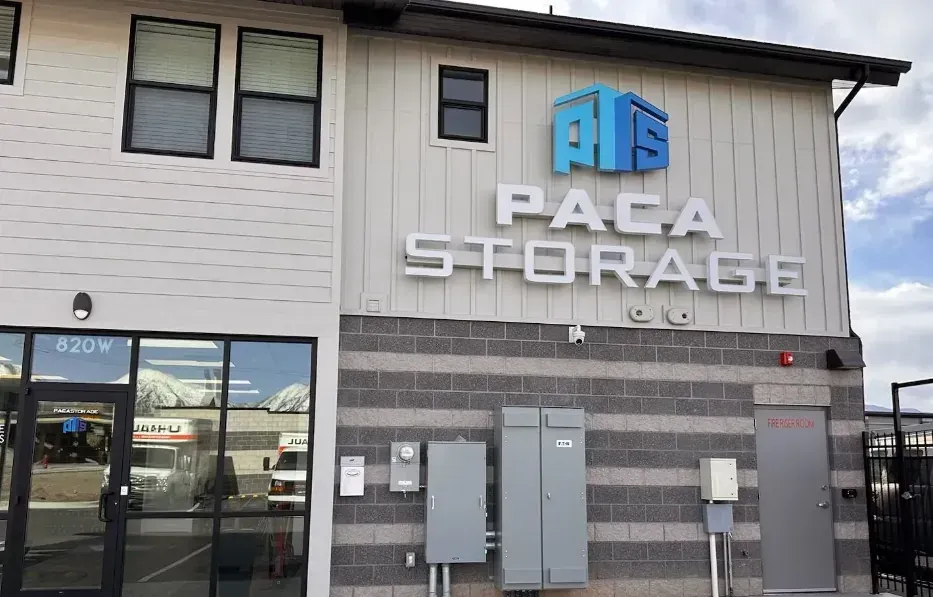
Covered RV Storage Near Me — Payson, Utah
"Covered" means three very different things depending on who's selling it. Here's what each tier actually stops, what we offer, and how to judge any lot you're considering.
Searching for covered RV storage near me usually means one thing: you want your rig out of the weather. Fair enough. But "covered" is a slippery word in this industry — it gets used for a metal canopy on posts, for a three-sided shelter, and sometimes for a fully enclosed building. Those are wildly different products at wildly different prices, and only one of them stops everything.
Being straight with you: PACA Self Storage does not offer canopy-style covered parking. We have two options — paved open-air spaces from $65 a month, and a fully enclosed bay at $384. This page explains where a canopy actually sits between those two, so you can decide which one you're genuinely looking for rather than which word you happened to type.
The Three Tiers of RV Storage Protection
Every RV storage option in Utah County falls into one of three categories. The difference between them is not marketing — it's what physically reaches your rig.
Tier 1 — Open air
A marked space on a surface, inside a fence. Nothing overhead. Protection comes from the perimeter — fencing, cameras, lighting, gate control — rather than from the weather. On a paved lot this is a genuinely good product for most rigs, and it's the cheapest by a wide margin.
Tier 2 — Covered (canopy)
A roof on posts, open on all sides. Stops direct overhead sun and vertical precipitation. Does not stop angled morning and afternoon sun, wind-driven rain and snow, blowing dust, or temperature swings — the space under a canopy tracks outside air almost exactly. Usually priced between open and enclosed.
Tier 3 — Fully enclosed
Four walls and a roof. Eliminates UV entirely, along with hail, precipitation from any angle, snow load and blowing debris, and substantially moderates the temperature swing. The most expensive by some distance, and the only tier that stops everything.
| What Reaches Your Rig | Open Air | Covered Canopy | Fully Enclosed |
|---|---|---|---|
| Overhead sun | Yes | Blocked | Blocked |
| Low-angle morning & evening sun | Yes | Yes | Blocked |
| Vertical rain and snowfall | Yes | Blocked | Blocked |
| Wind-driven rain and snow | Yes | Yes | Blocked |
| Snow load on the roof | Yes | Blocked | Blocked |
| Hail | Yes | Mostly blocked | Blocked |
| Blowing dust and debris | Yes | Yes | Blocked |
| Temperature swing | Full | Full | Moderated |
| Typical monthly cost | Lowest | Middle | Highest |
Where a Canopy Actually Helps — and Where It Doesn't
Covered parking isn't a gimmick. It genuinely reduces the two things that damage RVs fastest. It just doesn't do what a lot of owners assume it does.
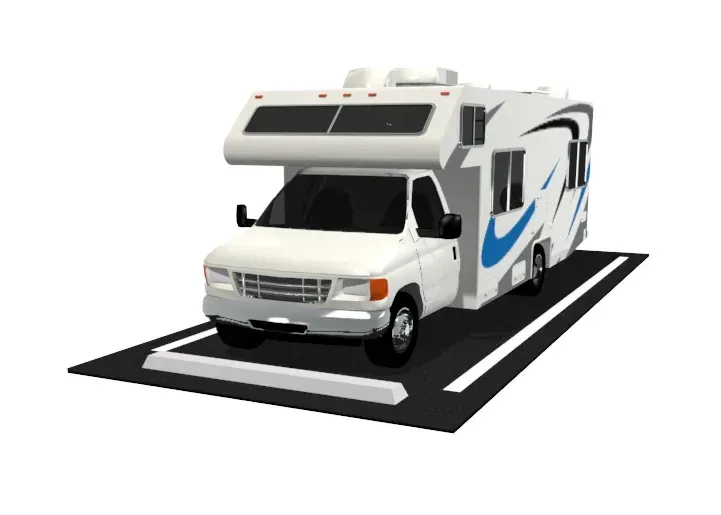
What a canopy genuinely does: takes the worst of the overhead UV off the roof membrane and sealants, which are the components whose failure leads to water intrusion and the most expensive repairs. It keeps snow off the roof. It stops most hail. Those are meaningful.
What owners wrongly assume it does:
- Stops UV. It stops the sun that's directly overhead. For several hours either side of midday the sun is at an angle, and the sides of your rig — decals, gelcoat, tires, window seals — are getting the full dose.
- Keeps it dry. Wind-driven rain and snow go sideways under a canopy without difficulty. In a Utah storm, a covered rig gets wet.
- Moderates temperature. It does essentially nothing here. Open-sided means the air under the roof is the outside air.
- Keeps it clean. Blowing dust settles on a covered rig the same as an uncovered one.
So the honest framing is that a canopy is roughly a half-measure at a middling price. If protection is what you're buying, the question worth asking is whether you want the cheap option that does the security job well, or the expensive one that actually solves the weather problem. Paying in the middle for a partial fix is the least satisfying of the three.
What We Offer Instead
If covered rv storage near me is what brought you here, these are the two options we actually have — at the two ends rather than the middle.
Paved open-air spaces — from $65/month
12x40 at $65, 16x40 at $75 and 12x50 at $80, for rigs up to 40 feet. Fully paved rather than gravel, striped, inside a perimeter fence with a single keycode-controlled gate, cameras on the gate and drive aisles, lighting throughout, and an on-site manager during the day. For most trailers and older rigs, this is the sensible answer — and pairing it with a quality RV cover gets you a good deal of what a canopy offers, for less than the difference in rent.
Fully enclosed bay — $384/month
A 12.75' × 40' enclosed bay for rigs up to 40 feet. Zero UV from any angle, no hail, no precipitation, no snow load, and a substantially moderated temperature swing. This is what people are usually reaching for when they search "covered" and mean "protected." Detail on what that prevents, and when it's worth the premium, is on indoor RV storage in Utah County.
Full pricing across every space size is on our RV storage in Payson page. We also store boats, trailers and vehicles in the same spaces.
Open from $65, enclosed at $384
Both fully fenced, paved and camera-monitored, with 24/7 keycode access.
How to Judge Any RV Storage Lot You're Considering
Whether it's covered, open or enclosed, these are the things that separate a lot you'll be happy with from one you'll leave. Worth asking anywhere — including here.
- Paved or gravel? This matters more than almost anything else and is rarely mentioned in a listing. Gravel becomes mud in spring, ruts under a heavy rig, and throws dust across everything all summer.
- What are the gate hours, really? A lot you can't reach at 5 a.m. is a lot you'll resent every trip. Ask whether 24-hour access is standard or an upgrade.
- Is the whole perimeter fenced, or three sides of it?
- Is there lighting across the lot, or only near the office? You will collect your rig in the dark at some point.
- Is anyone actually on site? An on-site manager notices things a remote call center cannot.
- Can you maneuver? Aisle width decides whether backing a fifth wheel is routine or a twenty-minute ordeal.
- If it's covered — how high is the canopy, and how are the posts spaced? A low canopy or tight posts can make a space unusable for a taller rig or one with slide-outs. Measure your height, including air conditioners.
- Where does the water go? A canopy sheds a great deal of runoff. Ask where it drains, because it's often straight onto the space beside it.
How Near Is Near Enough?
Proximity works differently for RV storage than for a storage unit, and it's worth thinking about before you optimize for the closest pin on the map.
You visit a storage unit often and briefly. You visit an RV space rarely and for a reason — you're collecting the rig or returning it, a handful of times a season. Ten extra minutes of drive time costs you perhaps an hour a year.
What you'll live with every single visit is the surface, the aisle width, the gate hours and whether you can get in at dawn. Those are worth optimizing for far more than distance. A gravel lot five minutes closer with a gate that locks at six is the worse deal, every time.
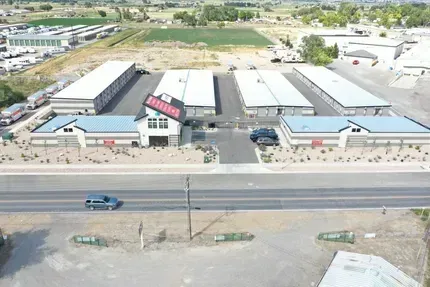
That said, here's where we are. We're at 820 W Utah Ave, one minute from I-15 Exit 250:
- Salem ~5 min
- Spanish Fork ~10 min
- Santaquin ~10 min
- Elk Ridge ~10 min
- Mapleton ~15 min
- Springville ~18 min
- Nephi ~30 min
There's also a genuine argument for storing further from home and closer to where you actually use the rig. Payson Canyon, the Nebo Loop and Payson Lakes start minutes from the gate, and Utah Lake is about fifteen minutes north — so a trip begins by hitching up and driving out rather than driving home first. Full directions are on storage units near me, and the highway angle on RV storage near I-15.
Location
PACA Self Storage
820 W Utah Ave
Payson, UT 84651
Phone
Office Hours
Monday–Saturday
9:30 a.m.–6:00 p.m.
Closed Sunday
Gate Access
24 hours a day, 7 days a week
for all tenants, with a personal keycode
Covered RV Storage FAQs
What is covered RV storage?
Covered RV storage is a roof on posts, open on all sides — a canopy over a marked parking space. It blocks overhead sun, vertical rain and snowfall, snow load and most hail. It does not block low-angle morning and evening sun, wind-driven rain and snow, blowing dust, or temperature swings, because the air under an open-sided canopy is simply the outside air.
Do you offer covered RV parking?
No — we don't have canopy-style covered spaces. We offer paved open-air spaces from $65 a month and a fully enclosed 12.75x40 bay at $384. Rather than sell a partial solution at a middling price, we've stayed at the two ends: the affordable option that does the security job properly, and the one that genuinely solves the weather problem.
What is the difference between covered and enclosed RV storage?
A canopy is a roof with open sides. An enclosed bay has four walls and a roof. The practical difference is that a canopy blocks what comes straight down, while enclosure blocks what comes from any direction — including low-angle sun on the sides of the rig, wind-driven precipitation, blowing dust and debris — and moderates the temperature swing, which a canopy does not affect at all.
Is covered RV storage worth it compared with open parking?
It's a genuine improvement — it takes the worst overhead UV off your roof membrane and sealants, keeps snow load off, and stops most hail. Whether it's worth the price gap depends on what's being charged. Our view is that if you're paying appreciably more than an open space, you're partway to the enclosed price for a partial result, and it's worth pricing all three before deciding.
Does a canopy protect an RV from hail?
Mostly, yes — that's one of the strongest arguments for covered parking, since hail damages roof panels, skylights, vent covers and air conditioner shrouds in a single afternoon and no amount of diligence prevents it outdoors. Severe wind-driven hail can still reach the sides of a rig under an open-sided canopy, but the roof, which is where hail does the expensive damage, is protected.
Should I use an RV cover if my rig is stored outdoors?
Yes, and it's the most cost-effective protection available for an open space. A quality breathable cover addresses UV on the roof and sides — including the low-angle sun a canopy misses — for a one-off cost typically less than a couple of months of the difference in rent. Use a cover made for RVs, not a tarp: tarps don't breathe, and trapped moisture underneath causes more damage than the sun would have.
Which is better, a canopy or an RV cover?
They solve overlapping problems from opposite directions. A canopy protects the roof from hail and snow load but leaves the sides exposed. A cover protects the whole exterior from UV and dust but won't stop hail. If you're storing outdoors long-term, a good cover on a paved, secure lot is usually the better value — and a cover plus an open space typically costs less over a year than covered parking alone.
What should I check before renting a covered space anywhere?
Canopy height and post spacing first — measure your rig's height including roof-mounted air conditioners, and check that slide-outs and doors will clear the posts. Then ask where the canopy drains, because runoff often lands on the adjacent space. After that, the same questions as any lot: paved or gravel, whether 24-hour access is standard, whether the full perimeter is fenced, whether the whole lot is lit, and whether anyone is actually on site.
How close does RV storage really need to be?
Less close than most people assume. You visit an RV space a handful of times a season, not weekly, so ten extra minutes of drive costs you around an hour a year. What you live with on every visit is the surface, the aisle width and the gate hours. A gravel lot five minutes nearer with a gate that locks at six is the worse deal every time.
How quickly can I get an RV space?
Usually the same day for outdoor spaces — reserve online or call (385) 327-5740, with no deposit to hold it. Come by during office hours, Monday to Saturday 9:30 a.m. to 6:00 p.m., with current registration and proof of insurance, and you'll leave with a gate code. The enclosed bay is a single space, so availability there is worth checking by phone first.
Straight answers, two real options
Paved open-air from $65, or fully enclosed at $384. Month-to-month, 24/7 access.





