
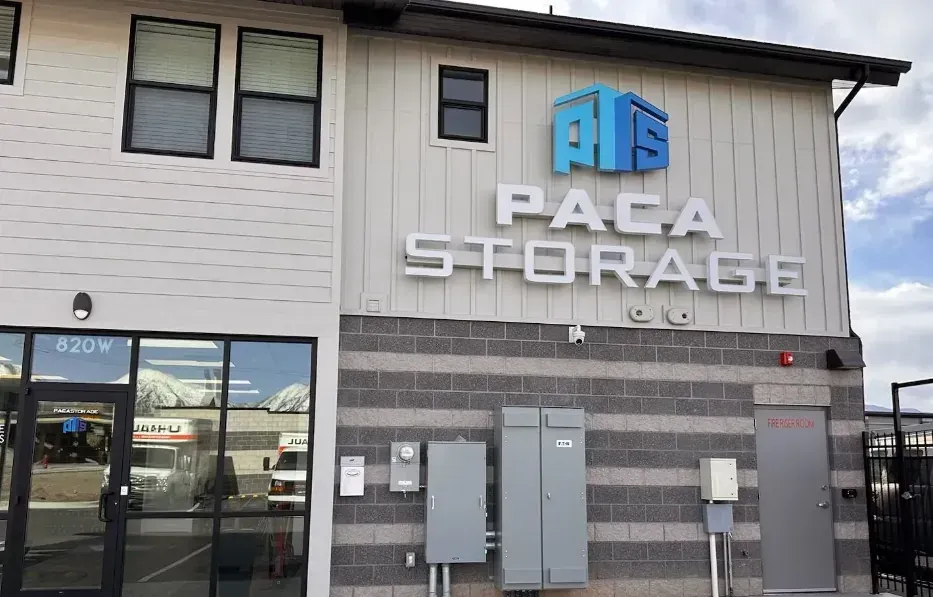
Business Storage Units in Payson, Utah
Tools, inventory, equipment and records — without a commercial lease, a deposit or a personal guarantee. Month-to-month, off I-15.
Most small businesses do not outgrow their space gradually. They outgrow it on a specific Tuesday, when a delivery arrives and there is nowhere to put it, and the choice becomes a garage that is already full or a commercial lease that costs more than the problem is worth.
The business storage units Payson Utah trades and small firms actually use sit in between those two options. A unit here is month-to-month, needs no deposit and no guarantee, and costs a fraction of the smallest flex space you could lease. This page covers who uses them for what, how the numbers compare against leasing, what the record-keeping rules actually require, and the things you are not allowed to do in one.
Who Uses Business Storage, and For What
The business storage units Payson Utah firms rent fall into five patterns, and they cover most of what walks through the door.
Trades and contractors
Tools, materials, fixtures and site equipment that will not fit in a van overnight and should not live in a driveway. The usual arrangement is a drive-up unit loaded at the start of a working day — and for a trade, the $10 premium on a drive-up unit pays for itself in the first week in time saved.
Online sellers and inventory
Stock that has outgrown a spare room but does not justify a warehouse. This is the fastest-growing group we see, and the one where a month-to-month term matters most, because inventory levels move with the season and nobody wants to be paying for empty racking in February.
Service businesses with seasonal equipment
Landscaping gear that sits from November to March, holiday installation equipment that works for six weeks a year, event and rental stock. Paying twelve months of commercial rent for six weeks of use is how small firms quietly lose margin.
Document archives
Paperwork past its active life but not past its retention period. More on the actual rules below, because the answer is longer than most people assume.
Businesses between premises
A lease ending before the next one starts, a refit, a relocation. The same gap that households face when a closing slips, and the same solution.
Against a Commercial Lease, the Numbers Are Not Close
Our largest unit, a 10x20, is $164 a month. That is the whole cost.
The smallest flex or warehouse space you can realistically lease in Utah County comes with a multi-year term, a triple-net structure where you also pay a share of the building's taxes, insurance and maintenance, your own utilities, a deposit, and frequently a personal guarantee from a director.
If what you need is a place to work , none of that is avoidable and a unit is the wrong answer. If what you need is a place to keep things , it is an expensive way to solve a cheap problem.
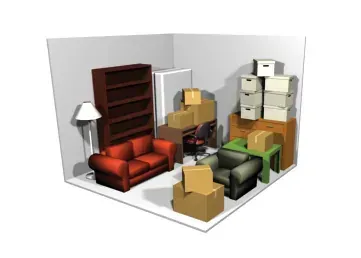
The other difference is reversibility. A lease is a decision you live with for three years. A unit is a decision you can undo next month, and can scale in either direction as the business does. Every unit here is month-to-month with no early-termination penalty.
No lease, no deposit, no guarantee
Business units from $72 a month, with the first month free.
Sizing It for a Business
| Size | Type | Rate | Typical business use |
|---|---|---|---|
| 5x10 | Indoor | $72 | Sole trader tools, files, light stock |
| 10x10 | Indoor | $115 | Online seller inventory, archives |
| 10x10 | Drive-Up | $125 | Trade van loaded at the door |
| 10x15 | Drive-Up | $143 | Contractor equipment and materials |
| 10x20 | Drive-Up | $174 | Pallets, racking, seasonal fleet gear |
| 12x40 | Parking | $65 | Work trailer, equipment trailer, box van |
One consistent difference between business storage units Payson Utah companies rent and household ones: businesses tend to under-size rather than over-size, which is the opposite of households. Stock arrives in pallets and paperwork arrives in boxes, and both accumulate faster than a floor plan suggests. If you are between two sizes, take the larger one — you can move down later, and moving down is far easier than splitting across two units at opposite ends of a property.
How Long You Actually Have to Keep Records
This is the part most storage pages skip, and it is the reason a lot of archive boxes exist. The IRS sets a period of limitations rather than a single retention rule, and it varies by situation:
- Three years in the ordinary case, or three years from filing and two years from paying the tax, whichever is later, if you file a claim for credit or refund.
- Six years if income was not reported and it amounts to more than 25 percent of the gross income shown on the return.
- Seven years for a claim relating to a loss from worthless securities or a bad debt deduction.
- At least four years for employment tax records, after the date the tax becomes due or is paid, whichever is later.
- Indefinitely if no return was filed, or a fraudulent return was filed.
Two practical notes. Those are federal periods; your industry, your insurer or your accountant may require longer, and professional bodies frequently do. And paper archives belong in a climate-controlled unit rather than an unconditioned one — a 70-degree annual swing degrades paper, toner, adhesives and anything laminated far faster than most people expect. This is a summary of published IRS guidance, not tax advice.
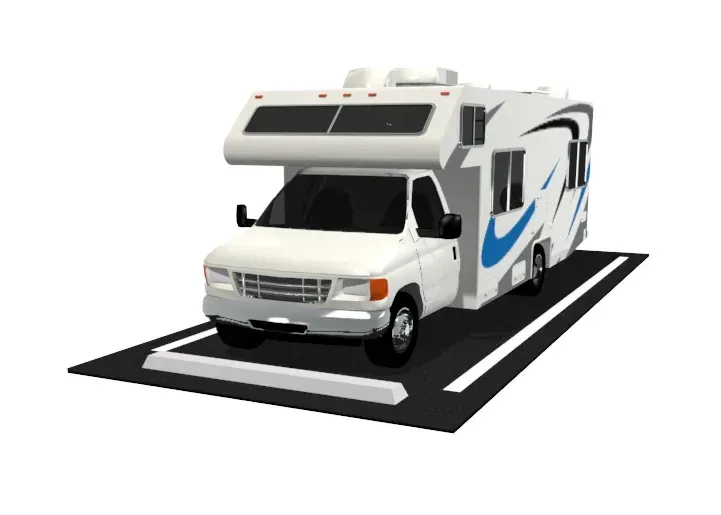
Vehicles, Trailers and Equipment
Outdoor spaces from $65 a month take work trailers, equipment trailers and box vans up to 40 feet, on a paved and fully fenced lot with cameras and lighting throughout.
For a trade that keeps a trailer, this is usually cheaper than any alternative and considerably better than leaving it on the street. See trailer storage and vehicle storage for the specifics.
Three Things to Sort Before You Move In
- Check your insurance, in writing. Many commercial policies cover property away from the premises only to a low sub-limit, and a homeowner's policy will generally not cover business inventory at all. Give your broker the unit address and a value. This is the step businesses skip most and regret most.
- Understand what you cannot do. You can collect and deliver as often as you like. You cannot operate from the unit, run equipment inside it, meet customers there, or use it as a workshop or retail space. That is standard across the industry, not a local rule.
- Know what cannot go in. Nothing hazardous, flammable, explosive or perishable — fuel, propane, solvents, pesticides, compressed gas, fireworks. Drain the tank on any equipment with an engine. If you are not sure whether something qualifies, ask before you arrive with it on a trailer.
Where We Are
Directly off I-15 at the Payson exit, which matters more for a business than a household — a unit you can reach from the interstate on the way to a job costs you almost nothing in detour time. We also serve Elk Ridge, Woodland Hills, Genola, Goshen, Mapleton and Springville.
Location
PACA Self Storage
820 W Utah Ave
Payson, UT 84651
Phone
Office Hours
Monday–Saturday
9:30 a.m.–6:00 p.m.
Closed Sunday
Gate Access
Extended daily hours
for all tenants, with a personal keycode. 24-hour access available by written request and approval.
Business Storage FAQs
Can a business rent a storage unit in Payson?
Yes, and a good number of our tenants are businesses rather than households. Trades keep tools and materials here, online sellers keep stock, service companies keep seasonal equipment, and several keep archived paperwork. The rental works the same way as a residential one — month-to-month, no long-term lease, and no minimum term beyond the first month.
How much cheaper is a storage unit than leasing commercial space?
The rate is only part of it. A 10x20 unit here is $164 a month, all in. Leasing 500 square feet of flex or warehouse space in Utah County usually means a multi-year term, a triple-net structure where you also pay a share of taxes, insurance and maintenance, plus your own utilities, plus a deposit and often a personal guarantee. For storage of stock, tools or records — as opposed to a place to work — the unit does the same job without the commitment.
What size unit does a small business usually need?
It depends on the trade. A sole trader storing tools and a few materials is usually fine in a 5x10 at $72. A contractor with equipment, or an online seller carrying real inventory, tends to want a 10x10 at $115 or a 10x15 at $143. Anyone storing pallets, racking or a vehicle plus stock is looking at a 10x20 at $164, which is our largest unit.
How long am I required to keep business records?
The IRS period of limitations is generally three years, extending to six if income was under-reported by more than 25 percent, and seven for a claim relating to worthless securities or a bad debt deduction. Employment tax records should be kept at least four years after the tax is due or paid. If no return was filed, or a fraudulent one was, records should be kept indefinitely. Those are federal rules — your accountant will tell you whether anything in your situation runs longer.
Can I run my business out of the unit?
No, and no facility in Utah will allow it. A storage unit is for storage — you can collect from it and deliver to it as often as you like, but you cannot operate from it, take customers there, run tools or equipment inside it, or use it as a workshop or retail space. That is a condition of the rental agreement everywhere, not a house rule.
Will my business insurance cover things stored off site?
Sometimes, but never assume it. Many commercial policies cover property away from the premises only up to a low sub-limit, and a homeowner's policy will generally not cover business inventory at all. Call your broker with the unit address and the value of what will be in it, and get the answer in writing before you move anything in. This is the single most commonly skipped step.
Can I have deliveries sent to my storage unit?
Ask us rather than assuming — arrangements vary and depend on what is arriving and when. What we would say generally is that a unit is not a receiving dock, and a courier will not wait. If you are running a volume of inbound stock, talk to us about how you want it to work before you set up the shipping address.
Is a drive-up unit worth it for a business?
For most businesses, yes, more than for households. If you are loading a van at the start of a working day, the $10 difference between an interior and a drive-up unit pays for itself the first week in time alone. Interior units make sense when the stock is light, moves rarely, or benefits from climate control.
Do I need climate control for stock or paperwork?
For paper archives, generally yes. Utah County swings close to 70 degrees between a summer afternoon and a winter night, and repeated cycling degrades paper, adhesives, toner and anything laminated. The same applies to electronics, cosmetics, printed packaging and anything with a shelf life. Tools, hardware, fixtures and building materials do not need it.
What can't I store in a business unit?
Nothing hazardous, flammable, explosive or perishable — that means fuel, propane, paint thinners, pesticides, compressed gas, fireworks and anything that can rot. Equipment with a fuel tank needs to be drained first. Tires are restricted at many facilities. If you are unsure whether a material qualifies, ask before you arrive rather than after.
A month-to-month answer to a commercial-lease problem
Business units from $72, trailer parking from $65, first month free.





